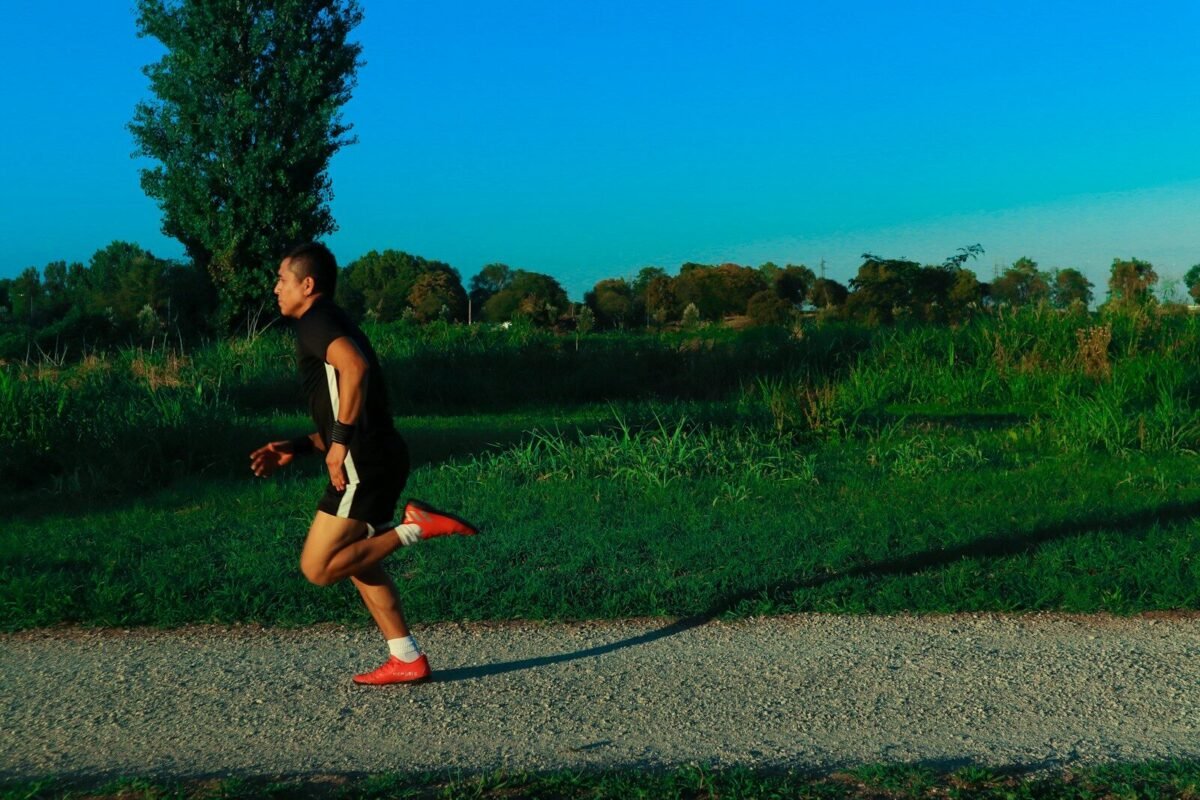
Watch someone who appears to run effortlessly and you’ll notice something long before you pay attention to their pace. They look relaxed. Their shoulders aren’t tense, their movements seem balanced, and nothing appears forced. It’s tempting to believe they’ve mastered a secret technique, but what you’re often seeing is simply good posture allowing the body to move efficiently.
Posture influences every part of running. It affects breathing, balance, stride length, arm movement, and even how your feet meet the ground. When your body is aligned naturally, movement becomes smoother and energy is directed forward instead of being wasted through unnecessary tension. The goal isn’t perfect posture. It’s posture that supports efficient movement over the entire run.
What Is Running Posture?
Running posture refers to how your body is aligned while you move.
Unlike standing posture, running posture is constantly changing. Every stride requires your body to balance on one leg, absorb impact, and propel itself forward before repeating the process again.
Good running posture allows these movements to happen naturally without excessive strain.
It creates a stable foundation that lets the rest of your running mechanics work together efficiently.
Start With Your Head
Your head plays a surprisingly important role in overall body alignment.
Looking too far down often encourages the shoulders to round and the upper back to collapse. Looking too far upwards can create unnecessary tension through the neck.
Instead, allow your gaze to settle naturally several metres ahead along your path.
This simple adjustment helps your neck remain relaxed while encouraging your spine to stay comfortably aligned.
Rather than holding your head rigidly, think about letting it float naturally above your shoulders.
Relax Your Shoulders
Tension often appears first in the shoulders.
Many runners unconsciously lift them towards their ears, particularly during harder efforts or when fatigue begins to build.
Raised shoulders waste energy and often spread tension into the arms and upper back.
Every few minutes during a run, take a moment to check how your shoulders feel.
If they’re tight, gently let them drop and relax.
A relaxed upper body makes running feel noticeably easier, especially over longer distances.
Keep Your Arms Comfortable
Your arms help maintain balance and rhythm.
They don’t create forward motion on their own, but they work with your legs to keep your body moving smoothly.
Allow your elbows to remain comfortably bent and your arm swing to happen naturally alongside your body.
Avoid crossing your arms dramatically across your chest or holding your hands tightly clenched.
A useful reminder is to imagine gently holding something delicate in each hand. Firm enough not to drop it, but relaxed enough not to crush it.
Stand Tall Through Your Torso
Good posture isn’t about exaggerating your chest or arching your back.
Instead, imagine growing slightly taller through your torso while keeping your body relaxed.
This gentle length through your spine creates space for comfortable breathing and helps maintain balance as you move.
Many runners find that simply thinking about standing tall naturally improves their running posture without needing to focus on individual body parts.
A Gentle Forward Lean
One of the most misunderstood aspects of running posture is forward lean.
Some runners deliberately bend at the waist, believing this will make them faster.
In reality, efficient runners lean very slightly from the ankles rather than folding through the hips.
The movement is subtle.
In many cases, you won’t even notice it happening.
As your pace increases, your body naturally adjusts its position to maintain balance and forward momentum.
Trying to exaggerate the lean usually creates more problems than benefits.
Let Your Hips Stay Stable
Your hips connect your upper and lower body, making them central to efficient running.
Strong, stable hips help your legs move smoothly while reducing unnecessary side-to-side movement.
Rather than trying to consciously control every hip movement, focus on maintaining balanced posture and allowing your stride to feel relaxed.
Strength and mobility exercises often improve hip stability more effectively than trying to change running technique during every run.
Avoid Chasing Perfect Posture
It’s easy to become so focused on posture that running begins to feel unnatural.
Checking every arm movement, every shoulder position, and every step quickly becomes exhausting.
Good running posture should support your running, not distract from it.
Occasional posture checks during easy runs are usually more effective than trying to control every movement throughout an entire workout.
Over time, efficient posture becomes a habit rather than something you constantly think about.
Small Adjustments, Lasting Benefits
Many runners expect posture improvements to produce immediate changes in speed.
More often, the benefits appear gradually.
Runs begin to feel smoother.
Breathing becomes more comfortable.
Fatigue arrives a little later.
Small aches caused by unnecessary tension often become less noticeable.
These changes rarely happen because you forced yourself into a perfect position.
They happen because your body gradually learns to move more efficiently.
Run Relaxed, Not Rigid
The best running posture is one that allows your body to move freely.
Relaxed shoulders.
Comfortable alignment.
Natural arm movement.
Balanced posture.
These qualities create efficiency without forcing your body into unnatural positions.
As your experience grows, your posture will often improve alongside your fitness. Stronger muscles, better coordination, and greater confidence naturally encourage smoother movement.
Running well isn’t about looking perfect.
It’s about allowing your body to move with enough freedom that every step feels a little easier than the one before. When posture becomes something you experience rather than something you constantly control, you’ve discovered one of the simplest secrets to enjoyable running.
Leave a Reply