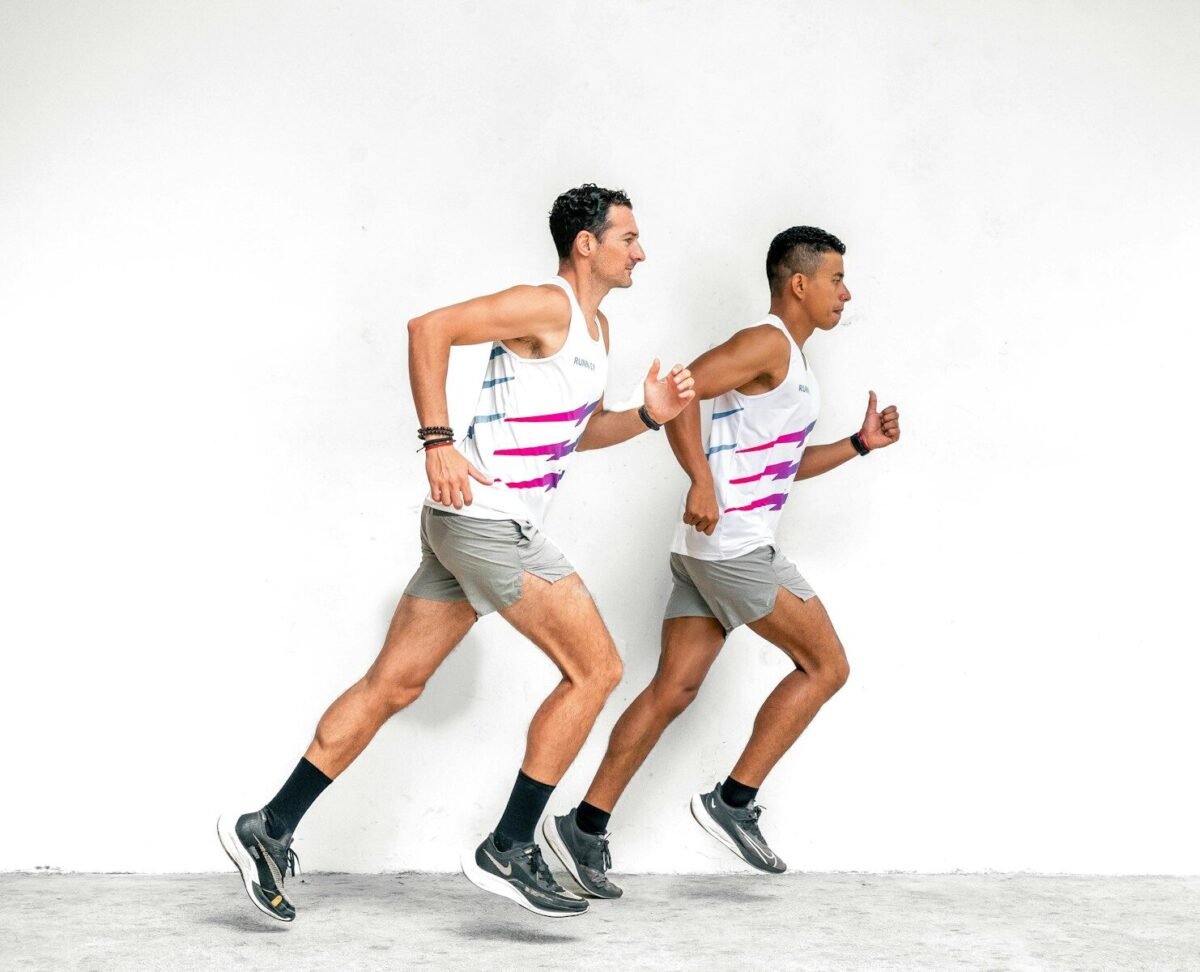
Visit any running forum or watch a few coaching videos online and you’ll quickly come across dramatic promises. Change your running form and you’ll become faster. Change your running form and injuries will disappear. Change your running form and you’ll unlock your true potential.
It’s an appealing idea because it suggests one adjustment can solve many problems.
Running, however, is rarely that simple.
Good running form is not something that appears overnight after learning a few technical cues. It develops gradually as your body becomes stronger, your coordination improves, and your confidence grows through consistent training. Most improvements happen quietly, often without you even noticing them.
What Does Improving Running Form Mean?
Improving your running form doesn’t mean making your stride look like someone else’s.
It means moving more efficiently.
Efficient runners waste less energy, maintain better balance, and remain relaxed even as the distance increases. They don’t necessarily look identical, but they share certain qualities.
Their posture feels natural.
Their arm swing is relaxed.
Their breathing matches their effort.
Their stride suits their body.
Most importantly, their movements work together rather than competing with one another.
Your Body Learns Through Repetition
Running is a skill.
Like any skill, it improves through practice.
Every easy run teaches your brain and muscles how to coordinate movement a little more effectively. Every long run develops endurance. Every workout strengthens the systems that support efficient movement.
This is why experienced runners often appear smoother than beginners.
They’re not consciously controlling every step.
They’ve simply accumulated thousands of kilometres of practice.
Your body remembers what it repeats.
Fitness Often Improves Form
One of the biggest surprises for new runners is discovering that better fitness often leads to better running mechanics.
As endurance improves, posture becomes easier to maintain.
Stronger hips provide greater stability.
Improved aerobic fitness reduces unnecessary tension.
Confidence allows movement to become more relaxed.
Many changes people attribute to technique are actually the result of becoming fitter.
That’s why building consistent training habits usually produces greater long-term improvements than constantly trying to change your running style.
When Should You Make Changes?
There are times when deliberate adjustments make sense.
Recurring discomfort.
A specific movement pattern identified by an experienced coach or physiotherapist.
Preparing for a particular event or terrain.
Returning after an injury.
These situations may benefit from targeted technique work.
Outside those circumstances, dramatic changes often provide fewer benefits than runners expect.
Sometimes the smartest decision is to continue building strength and experience while allowing your body to adapt naturally.
Small Adjustments Work Best
If you decide to work on your running form, resist the temptation to change everything.
Choose one simple focus.
Perhaps relaxing your shoulders.
Perhaps maintaining a comfortable cadence.
Perhaps standing a little taller through your torso.
Spend several easy runs becoming familiar with that adjustment before introducing another.
Gradual refinement gives your body time to adapt.
Running should always feel natural rather than forced.
Strength Supports Good Running
Running form doesn’t exist independently of physical conditioning.
Strong glutes help stabilise the pelvis.
A stable core supports posture.
Mobile hips allow smoother movement.
Strong calves and ankles help manage the forces of every stride.
Many apparent running form problems improve when the body becomes stronger.
This is one reason strength training has become such an important part of modern distance running.
Often the solution lies away from the running path.
Use Video as a Learning Tool
Watching yourself run can provide useful insights.
A short video recorded from the side or behind often reveals habits you never notice while running.
Perhaps your shoulders tighten.
Perhaps one arm swings differently from the other.
Perhaps your posture changes as fatigue develops.
Treat video as information rather than judgement.
Its purpose is to increase awareness, not to encourage criticism.
Trust Your Natural Movement
The human body is remarkably adaptable.
Given enough consistent training, it often discovers efficient movement patterns without constant instruction.
This doesn’t mean technique is unimportant.
It means your body deserves some trust.
Rather than analysing every step, allow yourself to enjoy running.
Pay attention to how movement feels instead of how it looks.
Comfort, rhythm, and efficiency usually develop together.
Progress Is Measured Over Years
The most satisfying improvements in running form rarely happen after a single coaching session or one technical drill.
They happen gradually.
A year from now your stride may feel smoother.
Your breathing may remain calmer.
Your posture may stay relaxed over longer distances.
Your movements may require less effort.
Many of these changes will arrive so naturally that you barely notice them happening.
That’s how lasting progress often works.
Become Your Own Runner
Running form is one of the most fascinating aspects of the sport because it reminds us that every runner is different.
Two people can train together, race together, and finish within seconds of one another while moving in completely different ways.
The goal has never been to make every runner look the same.
The goal is to help every runner move in the way that suits their own body.
Improve your fitness.
Build your strength.
Run consistently.
Stay curious about how your body moves.
Make thoughtful adjustments when there is a clear reason to do so.
Then give yourself the freedom to run naturally.
The best running form isn’t the one that attracts the most attention. It’s the one that quietly helps you enjoy every kilometre, recover well, and keep running year after year. In the end, that’s the kind of technique that matters most.