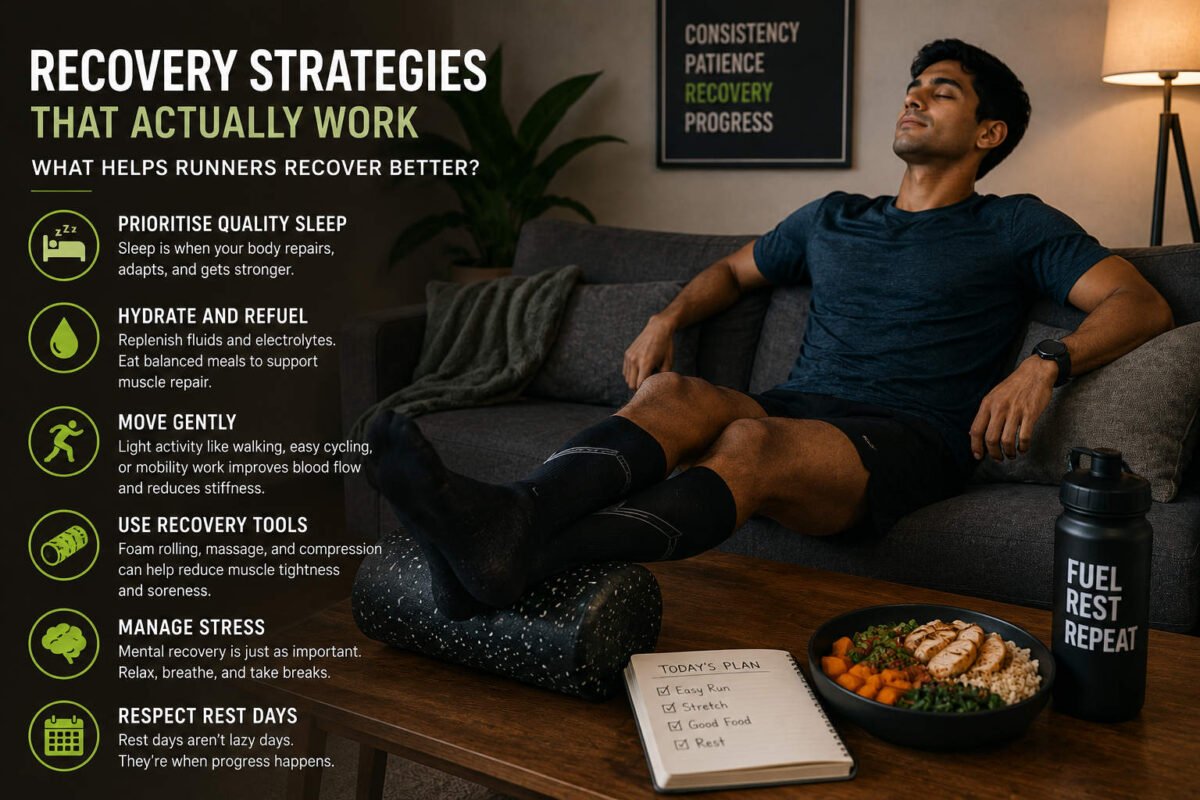
One of the biggest misconceptions in running is that fitness is built during the workout itself. The truth is a little more interesting. Training creates the stimulus, but recovery is where the body responds. Muscles repair microscopic damage, glycogen stores are replenished, hormones help coordinate tissue repair, and the nervous system gradually returns to balance. Every improvement you notice over the coming weeks begins during this quieter period after the run has finished.
Because recovery is less visible than training, it is often overlooked. It is tempting to search for a product or technique that promises faster results, but most experienced coaches would point somewhere much less exciting. They would ask how well you are sleeping, whether you are eating enough, how consistently you hydrate, and whether your training allows enough time for adaptation. Those habits rarely attract attention, yet they influence recovery more than almost anything else.
Sleep Is Still the Best Recovery Tool
If recovery strategies were ranked by importance, sleep would sit comfortably at the top of the list.
During sleep, your body carries out many of the repair processes that support adaptation after training. Muscles recover, hormones help regulate tissue repair, memories from skill-based training are consolidated, and the immune system continues its work. Consistently poor sleep does not simply leave you feeling tired. It can reduce your ability to recover between sessions and make demanding training feel much harder than it should.
No recovery gadget currently available can fully compensate for regularly missing quality sleep.
Nutrition Helps the Body Rebuild
Every run uses energy and places stress on muscles, tendons, and connective tissue. Recovery nutrition provides the raw materials your body needs to repair and adapt.
Meals containing carbohydrates help restore glycogen, while protein supplies the amino acids needed for muscle repair. A balanced diet rich in fruit, vegetables, whole grains, healthy fats, and adequate fluids supports far more than recovery alone. It also contributes to long-term health, immune function, and consistent training.
Good recovery nutrition does not require expensive powders or complicated recipes. Ordinary meals eaten consistently often provide everything recreational runners need.
Hydration Continues After the Run
Hydration is often discussed only in relation to performance during exercise, yet it also plays an important role afterwards.
Replacing fluids lost through sweat helps restore normal body function and supports many of the biological processes involved in recovery. On most days, drinking regularly throughout the day is sufficient. Longer runs, hot weather, or sessions involving heavy sweating may require additional attention to both fluids and electrolytes.
Like nutrition, hydration works best when it is part of your everyday routine rather than an emergency response after a difficult workout.
Easy Movement Has Its Place
Not every recovery day has to mean complete rest.
Gentle walking, easy cycling, swimming, or a very relaxed recovery run can increase blood flow and help many runners feel less stiff after demanding sessions. These activities should feel genuinely easy. Their purpose is to encourage movement without adding meaningful training stress.
Recovery days are not opportunities to squeeze in extra fitness. They exist to help your body absorb the work it has already completed.
Stretching and Foam Rolling
Stretching has long been part of running culture, although its benefits are often misunderstood.
Regular mobility work may help maintain flexibility and improve comfort, but it is unlikely to prevent injuries on its own. Foam rolling can also reduce the feeling of muscle tightness for some runners and may provide short-term improvements in comfort or range of motion.
Neither approach is a miracle solution. They are best viewed as supportive tools that complement good training habits rather than replace them.
What About Ice Baths and Massage Guns?
Recovery technology has become a growing industry, and many products have enthusiastic supporters.
Some runners genuinely enjoy ice baths, massage guns, compression garments, or sports massage. These approaches may help reduce the perception of soreness or improve how recovered someone feels. The scientific evidence, however, is often mixed, and the benefits are generally much smaller than those achieved through good sleep, balanced nutrition, and sensible training.
If a recovery tool helps you feel better and fits comfortably within your routine, there is little reason not to use it. Just remember that it should support the fundamentals, not replace them.
The Recovery You Need Changes Over Time
Recovery is not the same after every run.
A relaxed thirty-minute jog may require little more than your normal daily routine. A marathon, an ultramarathon, or a demanding interval session places far greater demands on the body and deserves a more deliberate recovery plan.
Learning to match your recovery to your training is an important part of becoming an experienced runner. The harder the challenge, the greater the importance of supporting your body’s response afterwards.
Consistency Beats Perfection
Many runners search for the perfect recovery routine.
The reality is that consistent habits almost always outperform occasional extremes.
Sleeping well most nights is more valuable than one exceptionally long night’s sleep after a race. Eating balanced meals every day contributes more than an expensive recovery drink once a month. Drinking enough fluids throughout the week is more effective than trying to correct dehydration all at once.
Recovery is not something you do occasionally. It is part of the rhythm of training.
Recover Well to Run Well
Recovery rarely receives the same attention as workouts because it is quiet work. It happens while you are sleeping, eating dinner with your family, taking an easy walk, or enjoying a day away from structured training. There are no finish lines or medals attached to those moments, yet they are often where future performances begin.
The strongest runners are not simply those who train the hardest. More often, they are the runners who recover well enough to train consistently, week after week, without accumulating unnecessary fatigue. They understand that fitness is built through the partnership between stress and recovery, not by endlessly adding more work.
Simple habits remain remarkably powerful. Sleep well, eat enough, stay hydrated, move gently when appropriate, and allow your body the time it needs to adapt. Those decisions may never feel dramatic, but over months and years they become some of the most important choices you make as a runner.
Leave a Reply