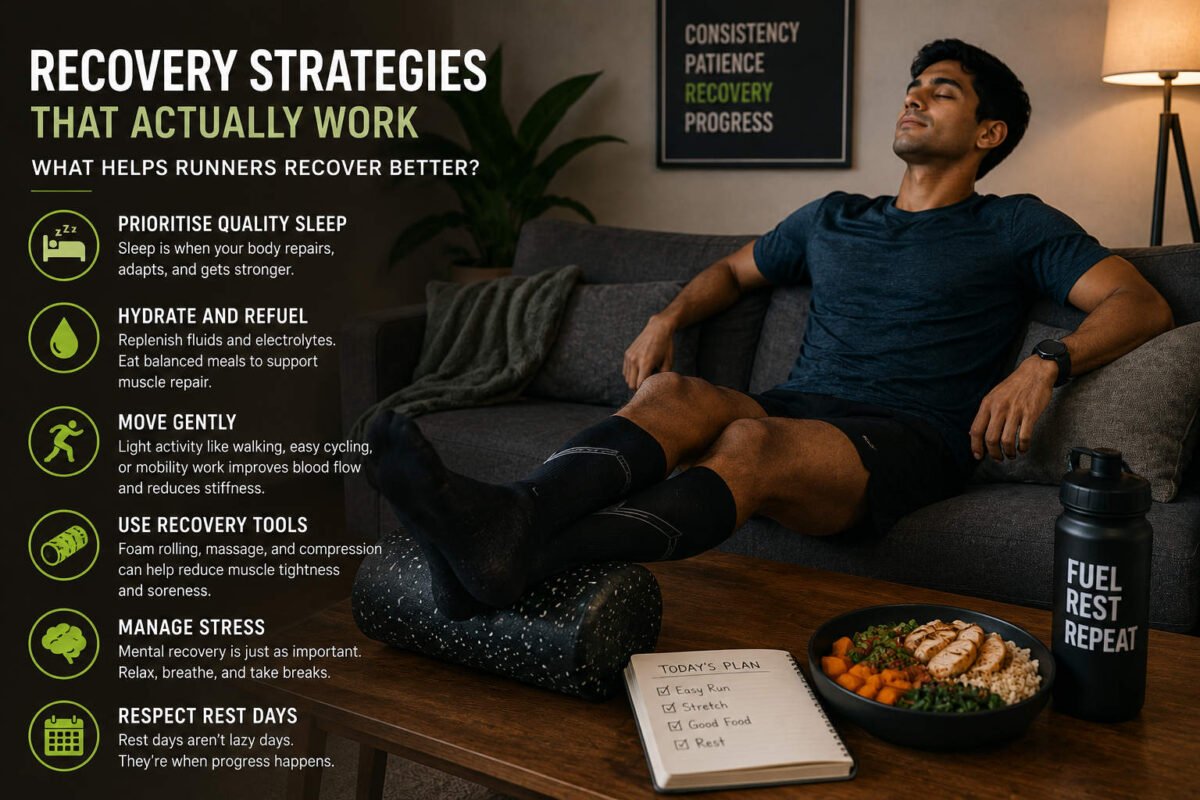
One difficult run rarely causes a problem. In fact, challenging workouts are an essential part of becoming a stronger runner. The body responds to those carefully planned stresses by repairing itself and adapting for the future. Difficulties usually begin when those periods of stress arrive faster than recovery can keep pace.
Training fatigue rarely appears all at once. More often, it builds gradually. A run that once felt comfortable suddenly requires more effort. Recovery seems to take a little longer. Motivation begins to fade for reasons that are difficult to explain. None of these changes may seem significant on their own, but together they often tell an important story. Your body may be asking for more recovery than it is currently receiving.
Fatigue Is a Normal Part of Training
It is important to remember that feeling tired after demanding training is not a sign that something has gone wrong.
Every training plan includes periods where fatigue increases as the body responds to greater workloads. Coaches sometimes refer to this as productive fatigue because it reflects the stress required for adaptation. After an appropriate period of recovery, runners often return feeling stronger than before.
The challenge is recognising when normal fatigue begins to accumulate beyond what your body can comfortably manage.
Your Easy Runs Stop Feeling Easy
One of the earliest warning signs often appears during your easiest sessions.
An easy run should leave you able to hold a relaxed conversation and finish feeling that you could comfortably continue if necessary. When those same runs begin to feel unusually demanding despite similar weather and terrain, it is worth paying attention.
A single difficult day means very little. Several easy runs that all feel unexpectedly hard may suggest that recovery is beginning to fall behind your training.
Recovery Takes Longer Than Usual
Experienced runners become familiar with how their bodies normally recover.
Perhaps your legs usually feel fresh after a night’s sleep following an interval session. Perhaps muscle soreness disappears within a day after a long run. If those patterns begin changing consistently, your body may be struggling to adapt to its current workload.
Recovery is highly individual, but your own normal pattern provides one of the most useful reference points you have.
Motivation Begins to Change
Running is not enjoyable every single day.
There will always be mornings when the alarm feels early or the weather makes staying indoors more appealing.
Accumulated fatigue often feels different.
The enthusiasm that usually accompanies training gradually fades. Sessions that once felt exciting begin to feel like obligations. You may find yourself dreading workouts that normally bring satisfaction.
Motivation alone should never be used to judge recovery, but when it changes alongside physical fatigue, it deserves attention.
Small Aches Become More Frequent
Most runners experience occasional soreness.
The concern is not a single tight calf or stiff hamstring after a demanding workout.
Instead, notice whether small aches are becoming more frequent, lasting longer, or appearing in different areas of the body. These subtle changes may indicate that tissues are not recovering as effectively between sessions.
Responding early often prevents minor discomfort from developing into more significant injuries.
Sleep and Daily Energy Can Change
Training influences much more than your running.
Accumulated fatigue sometimes appears through restless sleep, unusual daytime tiredness, difficulty concentrating, or simply feeling less energetic throughout the day. These changes are easy to dismiss because they may also be influenced by work, family responsibilities, or everyday stress.
That is precisely why it helps to look for patterns rather than isolated symptoms. When several signs begin appearing together, they often provide a clearer picture than any one change on its own.
What Should You Do?
The answer is rarely to stop running altogether.
More often, a small adjustment is enough.
Reducing mileage for a few days, replacing a hard workout with an easy run, taking an additional rest day, prioritising sleep, or paying closer attention to nutrition may give the body the opportunity it needs to catch up.
These decisions are not setbacks. They are part of managing training intelligently.
Prevention Is Better Than Forced Rest
Many runners continue pushing until their bodies make the decision for them.
Persistent pain, illness, or injury often leads to much longer interruptions than a short period of reduced training would have required.
The most experienced runners understand that backing off briefly is sometimes the fastest route back to consistent progress.
Good training is not about completing every planned session exactly as written.
It is about making decisions that allow you to keep training month after month.
Learn the Rhythm of Your Body
No watch, app, or training platform understands your body as well as you do.
Technology provides valuable information, but it cannot fully capture how you feel after a demanding week, how well you have been sleeping, or how much stress you are carrying outside running. Those details matter because they influence your ability to recover just as much as the kilometres recorded on your watch.
One of the greatest skills a runner develops over time is self-awareness. You begin to recognise the difference between ordinary tiredness and accumulating fatigue. You notice when a recovery day is likely to help more than another hard workout. You understand that long-term progress depends not only on challenging the body but also on respecting its need to adapt.
Running is a conversation between training and recovery. The body is constantly providing feedback through energy levels, soreness, motivation, and performance. The runners who enjoy the sport for decades are often the ones who learn to listen before that quiet conversation becomes a loud demand for rest.