Most runners naturally think about how to begin a run. Far fewer give the same attention to how they finish one. It is understandable because the hardest work is already complete, and the temptation is simply to stop moving, sit down, and continue with the day. For easy runs, that approach is often perfectly reasonable. After demanding sessions, however, allowing the body a short period to transition back towards rest can feel surprisingly beneficial.
A cool-down is not a magical recovery technique, nor is it a guarantee against soreness or injury. Instead, it is a gradual return from exercise that gives your heart, muscles, and nervous system time to adjust after sustained effort. Like a warm-up, it supports a smooth transition, but this time the direction is from movement back to recovery.
What Happens When You Finish Running?
During a run, your body is working at a very different level from its normal resting state.
Your heart pumps more blood to active muscles, breathing becomes deeper and faster, body temperature rises, and the nervous system coordinates thousands of repeated movements. None of these systems switch off the moment you stop running.
They gradually settle over the following minutes as your breathing slows, circulation returns to its normal pattern, and muscles begin shifting their focus from performance to repair. A cool-down simply allows that process to happen progressively rather than abruptly.
Does Every Run Need a Cool-Down?
The answer depends on the type of run you have completed.
After an easy thirty-minute jog, your body is already working at a relatively comfortable intensity. Walking for a minute or two before stopping is often enough to let your breathing settle naturally.
Hard interval sessions, races, long runs, and hill workouts place much greater demands on the body. Following these sessions with several minutes of easy jogging or walking often feels more comfortable than stopping immediately, particularly if your heart rate remains elevated.
The harder the effort, the more useful a gradual transition becomes.
Walking Is Often Enough
Many runners imagine a cool-down as another structured workout.
In reality, it is usually much simpler.
A few minutes of relaxed walking or very easy jogging allows breathing to settle naturally while giving the body time to begin returning towards its resting state. There is no need to chase pace or distance. The purpose is simply to keep moving gently until you feel comfortable.
Sometimes the simplest recovery habits are also the most effective.
Recovery Begins After the Run
The cool-down itself is only one small part of recovery.
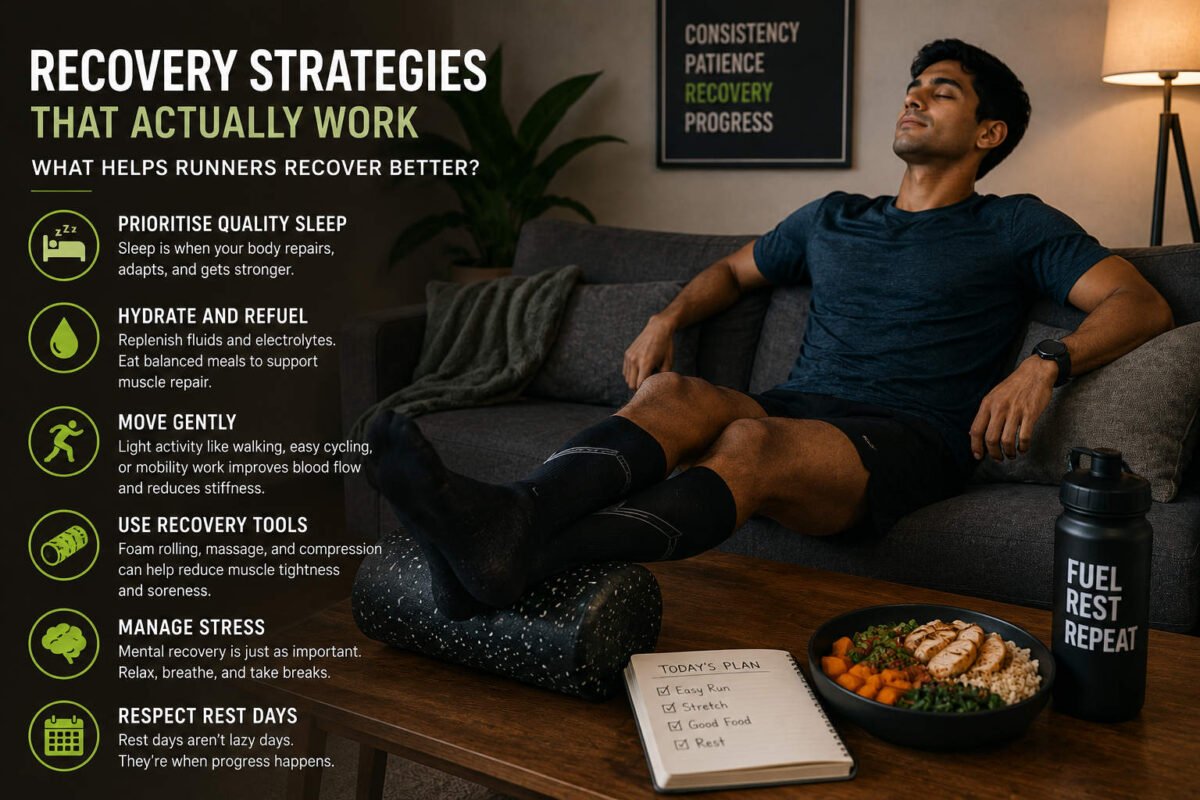
Once the session has finished, your attention can shift towards the habits that influence how well the body adapts over the coming hours. Drinking enough fluids, eating a balanced meal, changing out of wet clothing, and allowing time for rest all contribute far more to recovery than extending a cool-down for another fifteen minutes.
Thinking of recovery as a process rather than a single activity helps place the cool-down in its proper context.
Should You Stretch Afterwards?
Many runners naturally include stretching after a run.
Gentle stretching may feel pleasant and can be a useful opportunity to improve flexibility where it is genuinely needed. Some runners enjoy the chance to slow down both physically and mentally before continuing with the rest of the day.
What stretching is unlikely to do is dramatically reduce soreness or eliminate the risk of injury on its own. It works best when viewed as an optional addition to a broader recovery routine rather than the centrepiece of it.
Listen to How Your Body Responds
No two runners recover in exactly the same way.
Some people feel ready to continue with their day after only a short walk. Others appreciate spending a little longer moving gently before sitting down. Weather, training intensity, fitness, and individual preference all influence what feels comfortable.
Rather than following rigid rules, pay attention to how your body responds. Recovery habits should support your running rather than becoming another source of unnecessary complexity.
The End of One Run Is the Beginning of the Next
It is tempting to think of a run as ending when you stop your watch.
From the body’s perspective, another important phase has just begun.
Recovery starts immediately. Muscles begin repairing themselves, glycogen stores start to replenish, and countless biological processes quietly prepare you for the next training session. The decisions you make during this period influence how ready you feel tomorrow, next week, and throughout the months ahead.
A thoughtful cool-down is simply the first step in that longer recovery journey.
Finish as Well as You Start
The beginning and end of a run deserve equal attention.
A warm-up prepares the body for movement. A cool-down helps guide it back towards rest. Neither needs to become a lengthy ritual, yet both encourage smoother transitions that make running feel more comfortable and sustainable.
The strongest runners rarely rely on dramatic recovery methods. Instead, they build simple habits that quietly support consistent training. A short walk after a hard workout, a balanced meal, enough fluids, and a good night’s sleep may not attract much attention, but together they create the conditions where adaptation can take place.
Every run leaves the body a little different from when it began. Finishing thoughtfully gives those changes the best possible opportunity to become the foundation for stronger running tomorrow.