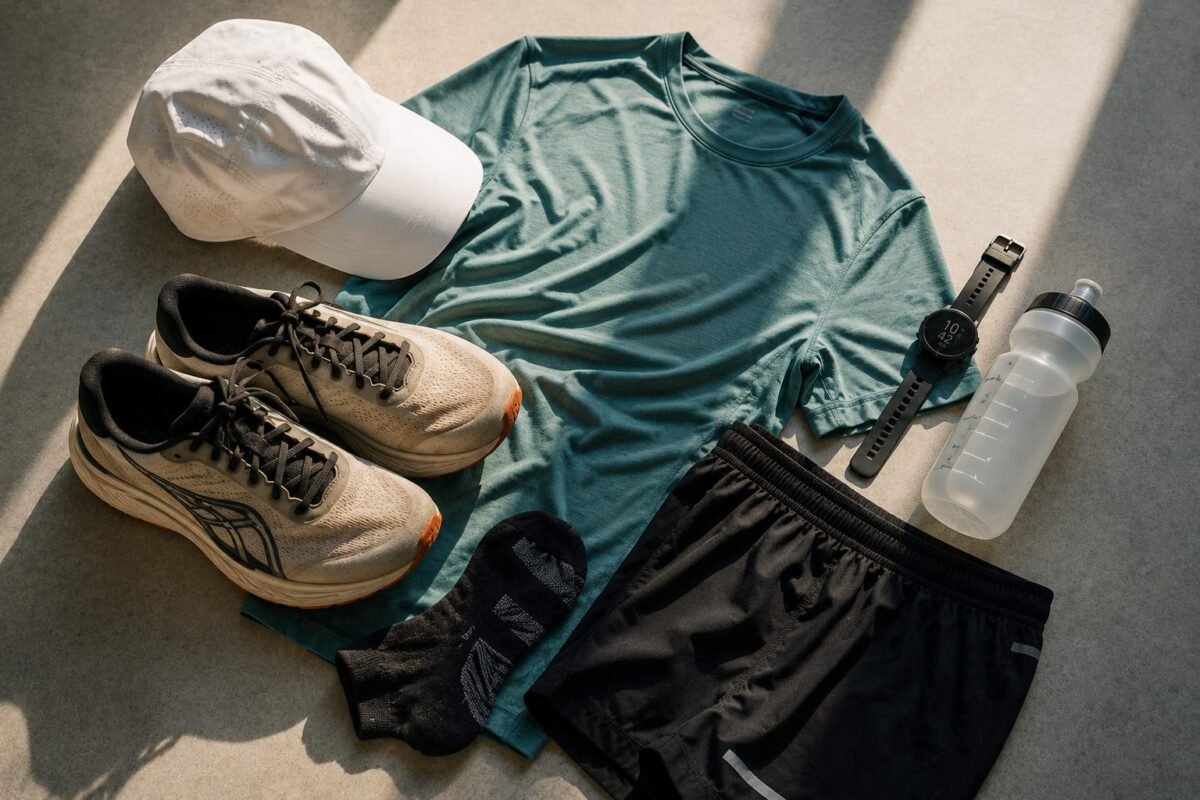
Running asks remarkably little from your wardrobe. Unlike many sports that require specialised equipment, most runs begin with just a comfortable pair of shoes and clothing that allows you to move freely. Yet anyone who has experienced heavy cotton soaked with sweat, clothing that rubs during a long run, or the discomfort of being dressed too warmly soon discovers that what you wear can have a noticeable influence on how enjoyable a run feels.
The purpose of running clothing is not to make you look like a runner. It is to help you stay comfortable so that your attention remains on the run rather than on what you are wearing. Once you understand that simple principle, choosing clothing becomes much easier.
Comfort Always Comes First
Comfort should guide every clothing decision.
A shirt that fits well, shorts that allow unrestricted movement, and socks that remain comfortable over longer distances contribute far more to an enjoyable run than fashionable colours or expensive logos. Running involves thousands of repeated movements, so even small irritations can become surprisingly noticeable over time.
The best clothing often becomes almost invisible during a run.
When you stop thinking about what you are wearing, it is usually doing its job well.
Why Fabric Matters
One of the biggest differences between everyday clothing and running clothing is the material.
Technical fabrics are designed to move moisture away from the skin and dry more quickly than traditional cotton. This helps reduce the feeling of heavy, damp clothing during longer or warmer runs.
Cotton is not forbidden.
For short, relaxed runs, many people remain perfectly comfortable wearing a cotton T-shirt. As running duration or intensity increases, however, moisture-wicking fabrics often become noticeably more comfortable.
Understanding the strengths of different materials allows you to choose clothing based on the conditions rather than following rigid rules.
Dress for the Weather, Not the House
One of the most common mistakes new runners make is dressing according to how the weather feels before they leave home.
Once you begin running, your body produces considerably more heat.
Clothing that feels comfortable while standing still may quickly become too warm after ten or fifteen minutes of movement.
A useful habit is to dress for how you expect to feel during the run rather than during the first few minutes outside. With experience, you will gradually learn how your own body responds to different temperatures and weather conditions.
Shorts, Tights, or Leggings?
There is no universally correct choice.
Some runners prefer lightweight shorts throughout the year because they enjoy unrestricted movement and good ventilation. Others feel more comfortable in tights or leggings during cooler conditions or simply because they prefer the fit.
The best option is the one that allows you to move naturally without distraction.
Confidence and comfort often matter much more than following trends.
Don’t Overlook Your Socks
Running socks rarely receive much attention until something goes wrong.
Poorly fitting socks can contribute to discomfort, rubbing, or blisters during longer runs. Well-designed running socks often use moisture-managing materials and minimise seams in areas that commonly experience friction.
You do not need an expensive collection of socks.
You simply need pairs that fit comfortably and remain comfortable throughout your training.
Sometimes the smallest pieces of equipment make the biggest difference.
Layering Makes Weather Easier to Manage
Running through changing seasons becomes much simpler when you think in layers rather than individual outfits.
A lightweight base layer can help manage moisture.
An additional mid layer provides warmth when temperatures fall.
A lightweight jacket may offer protection from wind or light rain without adding unnecessary bulk.
Layering also allows you to adapt your clothing to changing conditions instead of relying on one heavy garment to solve every weather challenge.
Support and Comfort Matter for Everyone
Running involves continuous movement, which means supportive clothing can improve comfort regardless of experience level.
For women, a well-fitting sports bra is one of the most important pieces of running equipment, providing support that allows comfortable movement over any distance.
For all runners, clothing should fit securely without feeling restrictive. Waistbands should remain comfortable, seams should not rub, and garments should allow a full range of movement throughout the stride.
Well-fitting clothing supports the run without demanding attention.
Buy Gradually
There is no need to build a complete running wardrobe immediately.
Many runners begin with one comfortable outfit and gradually add items as their training expands into different seasons and conditions. A lightweight rain jacket may become useful before winter. Additional technical shirts can make regular training more convenient. Gloves or a hat might become worthwhile as temperatures change.
Allowing your clothing collection to develop naturally keeps spending sensible while ensuring that every purchase has a clear purpose.
Dress to Enjoy the Run
Running clothing has improved enormously over the years, making it easier than ever to stay comfortable in different weather conditions. Yet the purpose of every garment remains surprisingly simple. Good clothing allows you to focus on your breathing, your surroundings, and the rhythm of your stride instead of constantly adjusting what you are wearing.
You do not need a wardrobe filled with specialised apparel to become a runner. A few comfortable, well-chosen pieces will support thousands of enjoyable kilometres. As your experience grows, your clothing choices will naturally evolve alongside your running, reflecting the places you run, the seasons you enjoy, and the goals you pursue.
The best running outfit is not the one that attracts the most attention. It is the one that quietly disappears into the background, leaving you free to experience the simple pleasure of moving comfortably through every run.
Leave a Reply