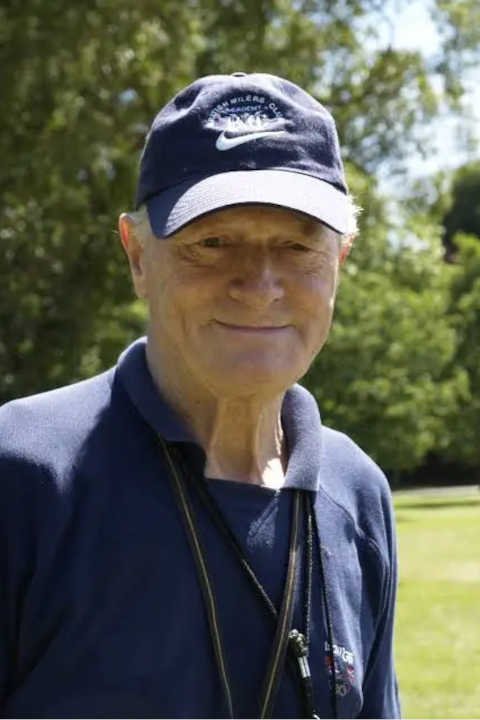
Few coaches have influenced modern distance running theory as profoundly as Frank Horwill. A pioneering British coach, educator, and thinker, Horwill helped reshape how runners train by challenging traditional ideas around mileage and intensity. Rather than focusing only on endurance or speed, he believed great athletes needed balance across every physiological system. His coaching philosophy combined science, observation, and practical experience into methods that continue to shape middle-distance and endurance training around the world.
Born in the United Kingdom in 1927, Horwill became deeply involved in athletics during a period when British running was searching for new ideas and international success. He approached coaching with curiosity and experimentation, studying physiology, biomechanics, and how athletes adapt to training over time. In 1963, he co-founded the British Milers’ Club, which became a hugely influential space for developing elite middle-distance athletes and exchanging progressive coaching ideas. Through both his coaching and leadership, Horwill helped push British running into one of its strongest competitive eras.
Horwill is best remembered for creating the Five-Pace Training Theory, a system that transformed the way athletes prepare for racing. His idea was simple but revolutionary: runners should train regularly at multiple pace zones rather than relying on only one or two intensities. By blending aerobic running, steady-state efforts, race pace, fast intervals, and repetition work into one program, athletes could develop endurance, speed, running economy, and tactical adaptability together. His ideas strongly influenced Peter Coe and, through that connection, became part of the training foundation behind Sebastian Coe’s rise to Olympic and world-record success.
Frank Horwill’s legacy remains deeply embedded in modern coaching. Concepts like pace-based training, interval progression, running economy, and multi-intensity workout design are now standard practice across the sport, but Horwill was helping define them decades before sports science became mainstream. Through his writing, coaching, and relentless curiosity, he gave distance running a smarter and more balanced training model—one that continues to guide everyone from elite milers to marathon runners today.