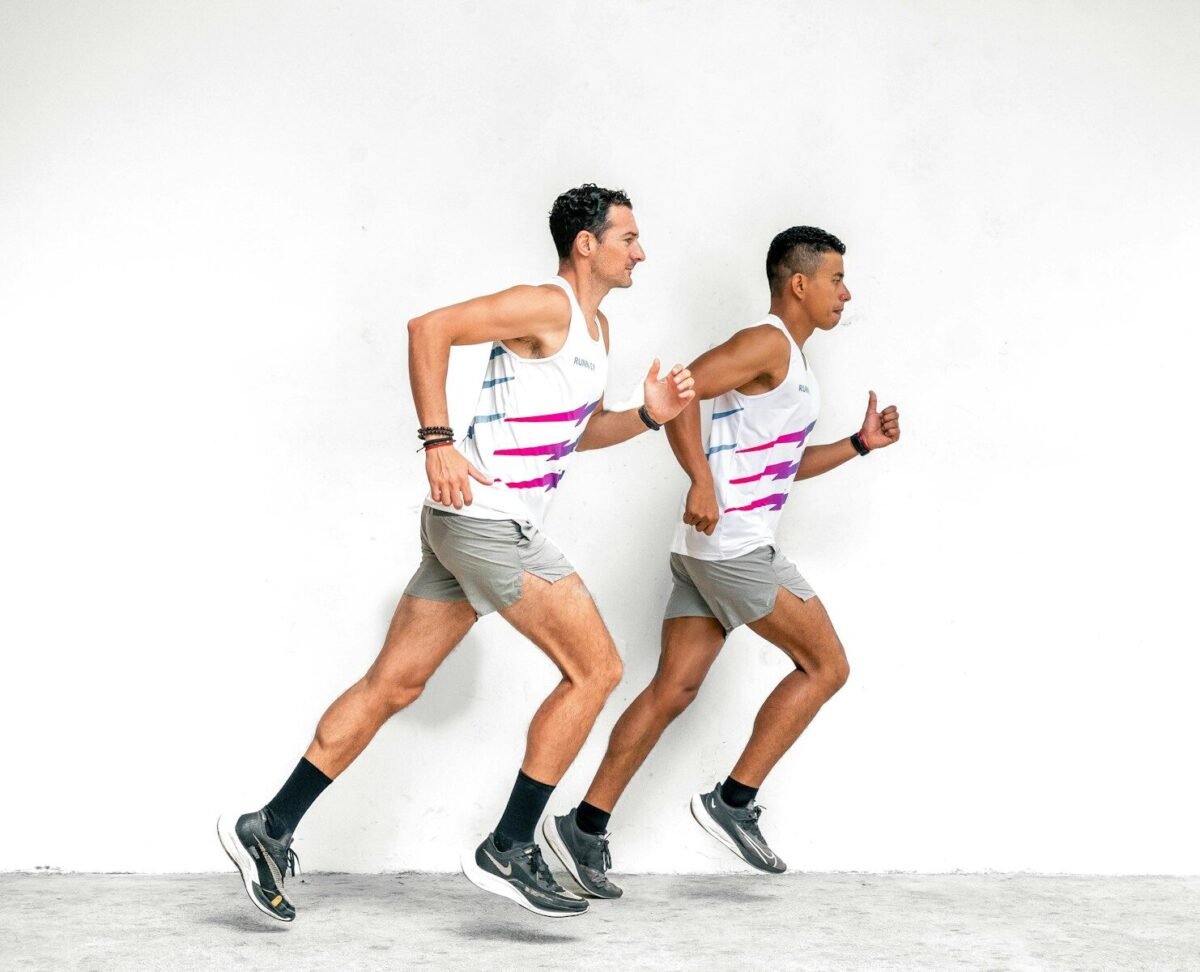
Watch a local parkrun, a city marathon, or the final laps of an Olympic race and you’ll notice something surprising. No two runners move in exactly the same way. Some take quick, compact strides while others appear to float effortlessly across the ground. Arm movements vary, foot strikes differ, and posture changes from one athlete to the next. Yet many of these runners are remarkably efficient.
This is where many people misunderstand running form.
Good running form isn’t about making every runner look identical. It’s about helping your body move efficiently, comfortably, and consistently. Your height, flexibility, strength, experience, and even the terrain beneath your feet all influence how you run. Rather than searching for a perfect technique, the goal is to develop movement patterns that suit your body while allowing you to run with less wasted effort.
What Is Running Form?
Running form is the way your body moves while running.
It includes every part of your movement, from the position of your head and shoulders to the rhythm of your arms, the length of your stride, where your feet land, and how your body responds to every step.
These movements work together as a complete system.
Changing one part of your running technique often influences several others. A slight adjustment to your posture may naturally alter your cadence. Improving arm swing can affect your balance. Developing stronger hips may change how your feet interact with the ground.
Running form isn’t a collection of isolated techniques. It’s a coordinated pattern of movement.
Why Running Form Matters
Every running step generates forces that travel through your body.
An efficient running form helps your muscles and joints manage those forces while using as little unnecessary energy as possible.
The benefits become noticeable in many ways.
You may feel less tired over longer distances.
Your movement becomes smoother.
Maintaining pace feels more comfortable.
You often recover more easily after training.
Perhaps most importantly, efficient movement allows you to focus less on the mechanics of running and more on simply enjoying the experience.
There Is No Perfect Running Form
One of the biggest myths in running is that every runner should aim for the same technique.
Research and experience both show that’s rarely true.
Elite runners display remarkable variety in the way they move. Some naturally heel strike. Others land closer to the midfoot. Cadence differs between athletes. Stride length changes according to speed, fatigue, and terrain.
What they have in common isn’t identical technique.
It’s efficiency.
Their bodies have learned to move in ways that minimise unnecessary effort while producing forward motion.
For recreational runners, chasing someone else’s running style often creates more problems than it solves.
The Foundations of Efficient Running
Although every runner moves differently, certain principles appear consistently among efficient runners.
A relaxed upper body allows unnecessary tension to disappear.
Comfortable posture keeps the body balanced rather than rigid.
A natural arm swing helps maintain rhythm.
Foot placement occurs beneath the body instead of reaching excessively forward.
Breathing remains controlled and appropriate for the effort.
None of these principles demand perfection.
Together, they encourage movement that feels economical rather than forced.
Running Form Changes With Experience
The way you run today won’t necessarily be the way you run a year from now.
As your fitness improves, muscles become stronger, coordination develops, and endurance increases, your movement often becomes smoother without conscious effort.
Many runners notice their stride becoming more relaxed after months of consistent training.
Their posture improves naturally.
Their cadence becomes more consistent.
Their confidence grows.
Running form often evolves as a result of better fitness rather than endless attempts to consciously change every movement.
Should You Try to Change Your Running Form?
Sometimes.
Sometimes not.
Minor adjustments can improve comfort or efficiency, particularly when guided by a coach or supported by a clear reason.
Changing your running form simply because you’ve read about an “ideal” technique is rarely necessary.
Every alteration places new demands on muscles, tendons, and joints. Sudden changes can temporarily increase discomfort while your body adapts.
Before changing your running form, it’s worth asking a simple question.
Is there actually a problem that needs solving?
If you’re running comfortably, staying healthy, and progressing steadily, dramatic changes may offer very little additional benefit.
Common Misconceptions About Running Form
Many popular beliefs about running form sound convincing but oversimplify a complex subject.
Landing on your midfoot doesn’t automatically make you a better runner.
A cadence of exactly 180 steps per minute isn’t a universal target.
Leaning aggressively forward won’t guarantee greater speed.
Swinging your arms higher won’t necessarily improve efficiency.
Good running form isn’t built by following a checklist.
It’s developed through consistent training, stronger muscles, improved coordination, and gradual refinement over time.
Learn Before You Change
The best runners are rarely the ones who constantly change their technique.
They’re the ones who understand how their bodies move.
Learning the fundamentals of posture, cadence, foot strike, stride length, breathing, and arm swing gives you the knowledge to recognise what feels efficient for you.
Improvement begins with understanding rather than imitation.
Running Well Is a Skill
Running is often described as one of the most natural forms of movement, yet becoming an efficient runner is still a skill that develops with practice.
Every run teaches your body something.
It learns to coordinate muscles more effectively.
It discovers smoother movement patterns.
It becomes more economical with energy.
Over time, what once felt awkward begins to feel effortless.
Good running form isn’t about looking like someone else.
It’s about moving in a way that allows your own body to run comfortably, efficiently, and confidently for many years to come. Understanding that principle is the first step towards every improvement that follows, whether you’re refining your posture, increasing your cadence, or simply enjoying the feeling of running a little farther than you did before.
Leave a Reply