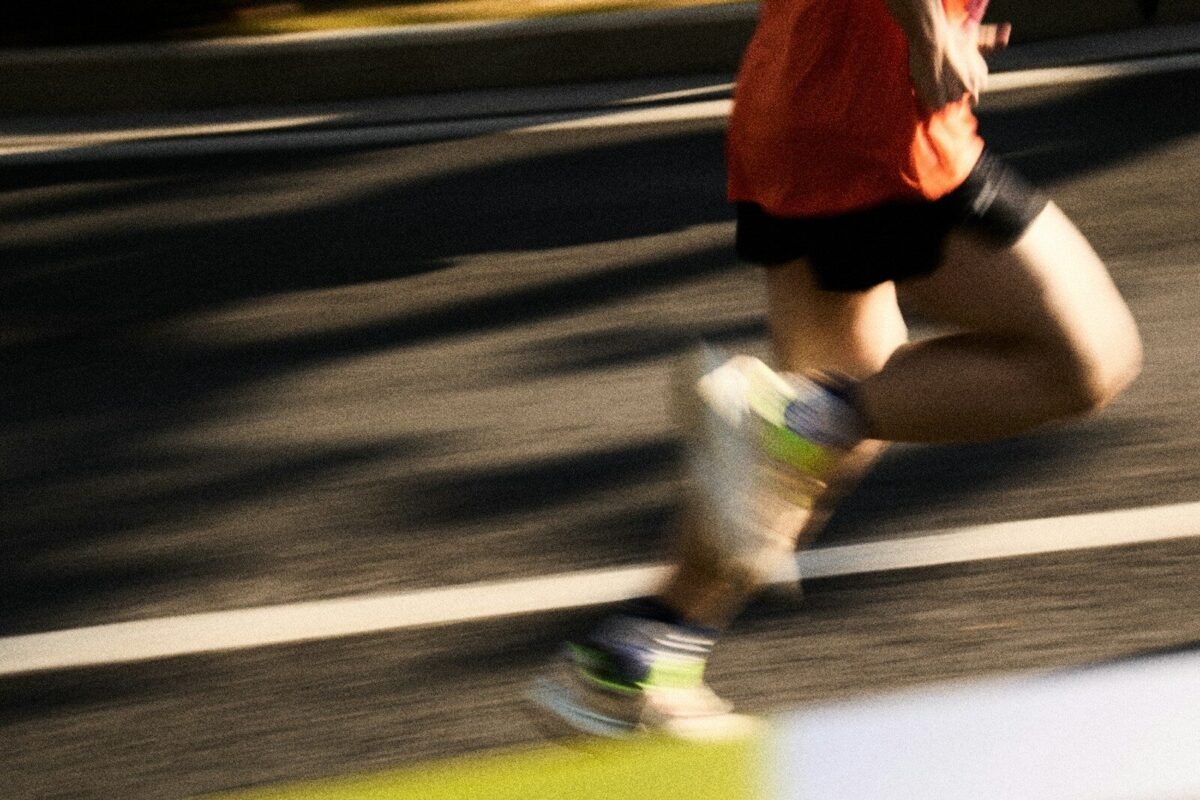
Listen to a group of runners passing by and you’ll notice something before you even see them. The rhythm of their footsteps is rarely identical. Some runners move with quick, light steps that almost blend into the background. Others have a slower, more deliberate rhythm that still carries them smoothly down the road. Neither style automatically tells you how fast or how efficient they are.
Cadence has become one of the most talked-about measurements in modern running, largely because watches and fitness apps display it so prominently. Numbers are easy to compare, which naturally leads many runners to wonder whether they should change theirs. Before making adjustments, it’s worth understanding what cadence really measures and how it fits into the bigger picture of efficient running.
What Is Running Cadence?
Cadence is the number of steps you take each minute while running.
Every time one foot touches the ground, it counts as a step. Add together the steps from both feet over one minute and you have your running cadence.
Cadence changes naturally.
Running uphill often produces quicker steps.
Running downhill may lengthen your stride.
Fatigue, terrain, pace, and even weather conditions can all influence your rhythm.
Rather than being fixed, cadence responds continuously to the demands of each run.
Why Cadence Matters
Every running stride is a balance between stride length and step frequency.
You can increase your speed by taking longer strides, quicker steps, or a combination of both.
For many runners, an efficient cadence helps reduce excessive reaching with the foot, encourages smoother movement, and allows the body to maintain momentum with less unnecessary braking.
The goal isn’t to move your feet as quickly as possible.
The goal is to find a rhythm that feels natural, controlled, and efficient for your body.
The Myth of 180 Steps Per Minute
Few numbers have influenced running discussions as much as 180.
Many runners have heard that everyone should aim for 180 steps per minute, often believing it to be the universal definition of good running form.
The story is more complicated.
The figure originated from observations of elite runners during competition, not recreational runners during everyday training.
Since then, research has shown that cadence varies naturally according to height, leg length, running speed, experience, and individual biomechanics.
Some efficient runners naturally run below 180.
Others run above it.
There is no single number that suits every runner.
Can Increasing Cadence Help?
Sometimes.
If a runner consistently overstrides, increasing cadence slightly may encourage the feet to land closer beneath the body, reducing unnecessary braking forces.
Small adjustments can also help some runners improve comfort or reduce stress on certain joints.
The important word is slightly.
Large, sudden changes often feel awkward and may place unfamiliar demands on muscles and tendons.
When changes are made, they should be gradual and allowed to develop naturally over time.
Cadence and Stride Length Work Together
Cadence should never be viewed in isolation.
Every runner combines step frequency with stride length to produce their overall pace.
Trying to increase cadence dramatically without allowing your stride to adjust often creates stiff, unnatural running.
Likewise, taking longer and longer strides without increasing cadence can lead to overstriding and reduced efficiency.
Efficient running comes from the relationship between these two movements rather than either one on its own.
How to Measure Your Cadence
Modern GPS watches often display cadence automatically, making it easy to observe trends over time.
If you don’t use a watch, you can still measure cadence by counting how many times one foot touches the ground over 30 seconds and multiplying by four.
Remember that the number itself is only information.
It should help you understand your running, not become something you constantly chase during every session.
Cadence naturally changes from one run to another.
That’s perfectly normal.
When Should You Think About Cadence?
Many beginners worry about cadence far earlier than necessary.
In reality, most new runners benefit far more from building consistent training habits, improving fitness, and learning to run comfortably.
As those qualities improve, cadence often becomes more efficient without any deliberate effort.
If you’re running comfortably, progressing steadily, and remaining injury free, there may be little reason to focus heavily on changing your cadence.
Sometimes the best adjustment is allowing experience to do the work.
Common Cadence Mistakes
One mistake is treating cadence as a goal instead of a tool.
Another is trying to copy someone else’s rhythm without considering differences in height, running speed, or natural movement.
Some runners also become so focused on increasing cadence that they forget about posture, relaxation, breathing, and overall running rhythm.
Running form works as a complete system.
Improving one part while ignoring the others rarely produces lasting results.
Find Your Natural Rhythm
Every runner develops a rhythm that reflects their body, experience, and training.
That rhythm becomes more refined with every easy run, long run, and workout you complete.
Cadence isn’t about chasing a famous number or forcing your feet to move unnaturally fast.
It’s about allowing your body to settle into an efficient pattern that supports smooth, relaxed movement.
As your fitness grows, you’ll often notice your cadence evolving naturally. Your stride becomes more confident, your movements more economical, and your running feels less like a collection of individual steps and more like one continuous flow forward.
That’s the real value of understanding cadence.
Not changing who you are as a runner, but learning how your body moves best and allowing that rhythm to become stronger with every mile.