Every runner develops a routine after finishing a run. Shoes come off, the watch stops recording, and the next workout begins to occupy the mind. In those quiet moments after training, however, there is another opportunity that is easy to overlook. Taking a little care of your equipment.
Looking after running gear does not require specialist knowledge or expensive products. Most equipment lasts longer simply because it is cleaned, dried, and stored thoughtfully. These habits take only a few minutes, yet they help preserve comfort and reduce unnecessary wear over months and years of training.
Caring for your gear is less about making it look new and more about keeping it ready for the next run.
Let Your Shoes Dry Naturally
Running shoes regularly encounter wet roads, muddy trails, and perspiration from long training sessions.
When they become damp, it is tempting to speed up the drying process by placing them next to a heater or using direct heat.
This is rarely a good idea.
High temperatures can affect glues, foams, and upper materials over time. Allowing shoes to dry naturally in a well-ventilated space is generally a safer approach. If the inside of the shoe is particularly wet, loosely filling it with newspaper or another absorbent material can help draw out moisture while maintaining its shape.
Patience is usually kinder to running shoes than excessive heat.
Keep Shoes Clean Without Overdoing It
Shoes do not need to look spotless after every run.
A little dust or dried mud causes very little harm.
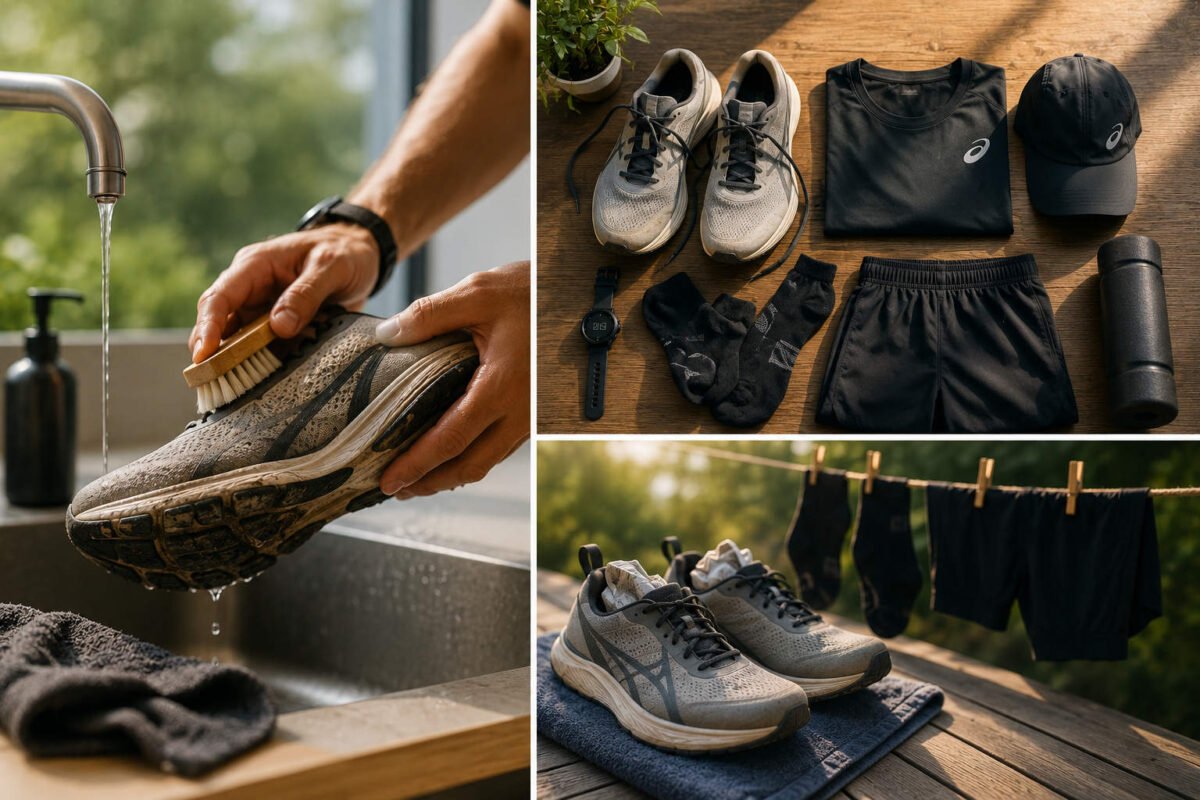
When dirt begins to build up, however, removing it gently helps preserve both appearance and materials. A soft brush or damp cloth is often all that is needed. Harsh cleaning products and washing machines may seem convenient, but they can shorten the life of certain materials.
The goal is simply to remove what does not belong there while allowing the shoe to remain exactly what it was designed to be.
Wash Running Clothing Promptly
Technical fabrics work best when they remain clean.
Sweat, salt, and body oils gradually reduce the performance of moisture-managing materials if clothing is left unwashed for long periods. Fortunately, most running clothing is easy to care for by following the manufacturer’s washing instructions.
Using gentle wash cycles and avoiding excessive heat during drying often helps fabrics maintain their shape and performance for longer.
Clean clothing is not only more comfortable.
It also tends to last much longer.
Pay Attention to Small Problems
Equipment rarely fails without warning.
A loose lace.
A seam beginning to separate.
A small tear in a pocket.
A hydration bottle developing a leak.
Addressing these minor issues early often prevents larger problems later. Just as runners benefit from noticing small signs of fatigue before they become injuries, running gear benefits from regular attention before wear becomes damage.
Small repairs can often extend the useful life of equipment significantly.
Look After Your Running Watch
GPS watches are designed for outdoor use, but they still benefit from occasional care.
Rinsing away sweat after particularly hot runs, keeping charging contacts clean, and checking straps for signs of wear all help maintain reliable performance. If you regularly run in rain, near the sea, or on dusty trails, a little extra attention can help keep sensors and buttons working smoothly.
Technology performs best when it receives the same thoughtful care as the rest of your equipment.
Store Gear Ready for the Next Run
Good storage habits make running more enjoyable.
Allow shoes to air between runs rather than leaving them inside a closed bag.
Hang damp clothing to dry before placing it in the laundry basket.
Keep smaller items such as lights, hydration flasks, or waist belts together in one place so they are easy to find before your next session.
Simple organisation saves time and reduces the temptation to replace equipment simply because it has been misplaced.
Rotation Can Reduce Wear
If you own more than one pair of running shoes, rotating them between runs may provide practical benefits.
Each pair has time to dry completely and recover from repeated compression before being used again. Rotation can also be useful if you train across different surfaces or use specific shoes for particular sessions.
That said, owning multiple pairs is not a requirement.
Many runners happily care for one reliable pair and replace it only when the time is right.
Good care matters more than the size of your collection.
Respect the Purpose of Your Gear
Running equipment performs best when used for the purpose it was designed for.
Daily trainers are intended for running rather than everyday walking.
Hydration vests work best on longer outings where carrying fluids is genuinely useful.
Technical clothing performs differently from casual wear because it is designed around movement and moisture management.
Using equipment thoughtfully often extends both its lifespan and its usefulness.
Look After the Things That Look After You
Running gear quietly supports thousands of kilometres without asking much in return. Shoes absorb countless impacts. Clothing keeps you comfortable through changing weather. A watch records your progress without complaint. Accessories solve practical problems that make training easier and safer.
Taking a few minutes to care for these items is a simple way of respecting the role they play in your running journey. More importantly, it helps ensure they remain reliable companions through many more early mornings, long runs, races, and adventures.
Good equipment is an investment, but thoughtful habits are what allow that investment to deliver its full value. Clean it when needed, store it carefully, and replace it only when it has genuinely reached the end of its useful life. Looking after your gear is not about preserving possessions. It is about supporting the experiences those possessions make possible.