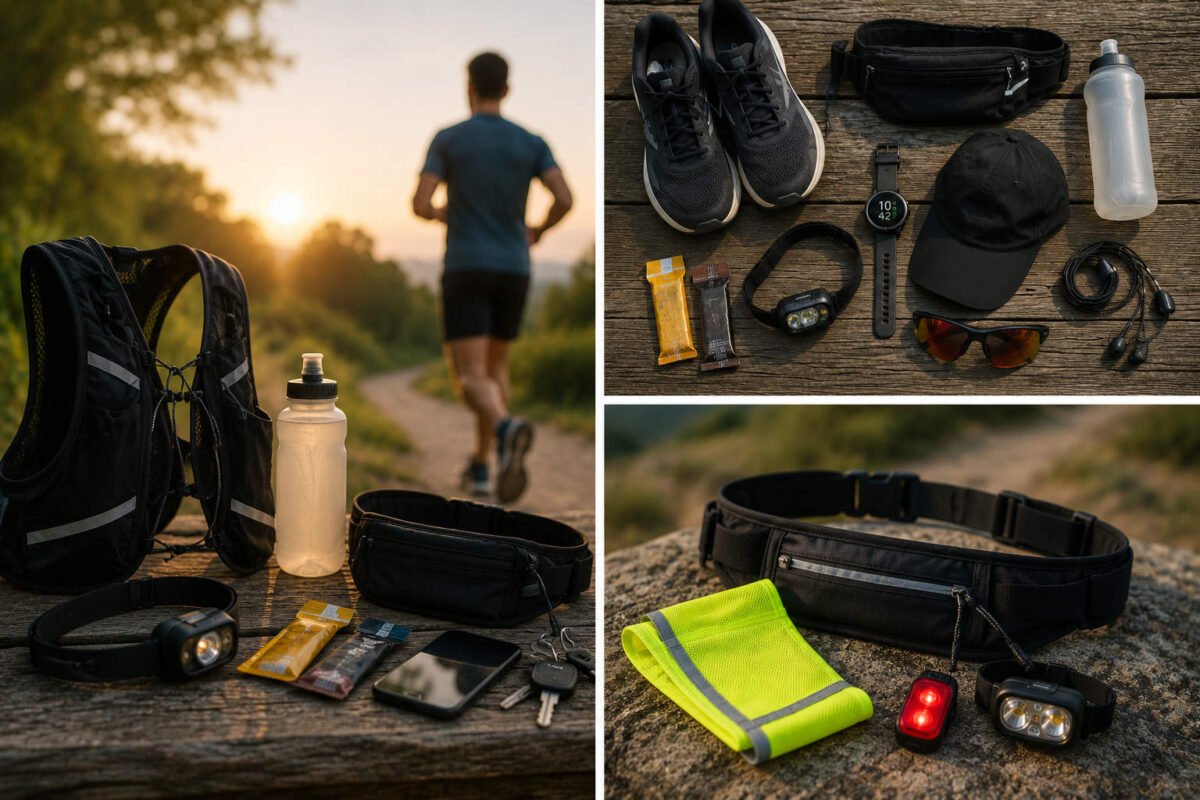
One of the strengths of running is that it remains remarkably simple. You can complete thousands of enjoyable kilometres with little more than good shoes and comfortable clothing. As your experience grows, however, certain accessories begin solving practical problems. Longer runs create hydration needs. Early morning training may require better visibility. Carrying a phone, keys, or nutrition becomes easier with thoughtfully designed equipment.
The important point is that accessories should respond to real needs rather than imagined ones. Buying equipment because someone else owns it rarely improves your running. Buying equipment because it genuinely makes your own runs safer, more comfortable, or more convenient often does.
Hydration Belts and Running Vests
For shorter runs, many runners do not need to carry water at all.
As distances increase or temperatures rise, staying hydrated becomes more important. Hydration belts and running vests provide practical ways to carry water, particularly during long training runs or events where access to aid stations is limited.
The choice between a belt and a vest often depends on personal preference and the amount of fluid you need to carry. Neither is automatically better. The right option is simply the one that remains comfortable throughout your run.
Carrying the Essentials
Modern runners often carry more than previous generations.
A phone for safety.
House keys.
An identification card.
A bank card.
Energy gels during longer sessions.
Trying to fit everything into clothing pockets can quickly become uncomfortable. Lightweight waist belts or compact running packs solve this problem without significantly affecting movement.
The best carrying system is usually the one you forget you are wearing.
Visibility Is Part of Safety
Many runners train before sunrise or after sunset.
At these times, being visible becomes far more important than looking stylish.
Reflective clothing, clip-on lights, and headlamps all serve different purposes. Reflective materials help others notice you when illuminated by vehicle headlights, while lights actively increase your visibility and allow you to see the path ahead.
If your running regularly takes place in low-light conditions, these accessories are practical safety equipment rather than optional extras.
Protecting Yourself From the Weather
Small accessories often make a noticeable difference during changing weather.
A lightweight cap can reduce glare on bright days.
Sunglasses help protect your eyes from strong sunlight, wind, and dust.
Gloves become surprisingly valuable during cold mornings.
A lightweight neck gaiter can provide additional warmth or protection depending on the conditions.
None of these items make someone a better runner.
They simply allow you to stay more comfortable while running in different environments.
Preventing Chafing
Few things spoil an enjoyable run as quickly as chafing.
Repeated movement combined with sweat can create irritation in areas where clothing or skin rubs together. Anti-chafing balms, suitable clothing, and well-fitting gear often prevent these problems before they begin.
This is one of those accessories many runners ignore until they experience discomfort.
Once they discover its value, it often becomes a permanent part of their running routine.
Accessories Should Solve Problems
One useful habit is asking yourself a simple question before buying anything.
What problem am I trying to solve?
If the answer is clear, the purchase may be worthwhile.
Perhaps you struggle to carry water during long runs.
Maybe you need better visibility during early morning training.
Perhaps your current clothing causes repeated discomfort.
Buying equipment with a clear purpose usually leads to much greater satisfaction than buying something simply because it appears on a list of recommended gear.
Avoid Collecting Equipment
The running industry introduces new products every year.
Some are genuinely innovative.
Others offer only small differences from equipment already available.
There is nothing wrong with appreciating new technology or clever design. The challenge is avoiding the feeling that owning more equipment automatically leads to better running.
Experience often teaches the opposite lesson.
Many long-term runners gradually simplify their equipment, keeping only the items they regularly use while leaving everything else at home.
Useful gear earns its place through repeated use.
Build Your Kit Over Time
No runner begins with a complete collection of accessories.
Most equipment is acquired gradually as new situations arise.
The runner preparing for a marathon may eventually need a hydration solution.
Someone discovering trail running may appreciate a lightweight vest.
A commuter running home from work may benefit from reflective equipment and a compact pack.
Each addition reflects the evolution of your running rather than an expectation that every accessory is essential from the beginning.
Let Simplicity Guide Your Choices
Running accessories can make training more enjoyable, safer, and more practical when chosen thoughtfully. They help solve everyday challenges without changing the fundamental nature of the sport. At the same time, it is worth remembering that accessories are meant to support your running, not complicate it.
The most valuable equipment is often the equipment that quietly performs its task without demanding attention. A comfortable waist belt, a reliable headlamp, or a hydration vest that fits well becomes part of the background, allowing you to focus on the road, the trail, or the conversation beside you.
Choose accessories because they genuinely improve your experience, not because they promise to transform it. Running has always been defined more by the person taking the next step than by the equipment they happen to carry. The simpler your decisions become, the easier it is to enjoy what matters most: getting outside and running.