Almost every runner has experienced both extremes.
One day you head out feeling light, comfortable, and full of energy. The run flows naturally from the very first kilometre. On another day, your stomach feels heavy, your energy disappears halfway through the session, or you spend the entire run wishing you had made different choices at breakfast.
Food plays an important role in those experiences.
The goal of pre-run nutrition isn’t to eat as much as possible before exercise. It’s to begin your run feeling comfortably fuelled without overloading your digestive system. Finding that balance takes a little experimentation, but the principles are surprisingly straightforward.
Why Eating Before Running Matters
Your body needs energy to run.
Some of that energy comes from glycogen already stored in your muscles and liver.
Some comes from the food you’ve eaten throughout the day.
For shorter, easier runs, those existing energy stores are often more than enough.
As runs become longer or more demanding, beginning well fuelled becomes increasingly important.
The right pre-run meal helps maintain energy, supports performance, and allows you to finish your run feeling stronger.
Timing Matters as Much as Food
One of the biggest factors in pre-run nutrition isn’t what you eat.
It’s when you eat.
A larger meal generally needs several hours to digest comfortably.
A lighter snack usually requires much less time.
Trying to eat a large meal immediately before running often leaves food sitting in the stomach while your muscles are asking for blood flow instead.
That combination rarely feels comfortable.
Giving your body enough time to digest is often more important than choosing the “perfect” food.
Before an Easy Run
Easy runs are usually the most flexible.
If you’ve eaten balanced meals during the previous day, many easy runs can be completed comfortably without a substantial meal immediately beforehand.
Some runners enjoy a small snack before heading out.
Others prefer running first and eating breakfast afterwards.
Both approaches can work.
The important question is how your body responds.
Comfort should guide your decision.
Before a Long Run
Long runs place much greater demands on your energy stores.
Beginning them underfuelled often leads to fatigue long before your legs are ready to stop.
For these sessions, most runners benefit from eating a meal containing easily digested carbohydrates a few hours beforehand.
The goal isn’t to feel completely full.
It’s to begin the run with sufficient energy while allowing digestion to take place before exercise begins.
Long runs are also the perfect opportunity to practise the nutrition you’ll eventually use during races.
Before Speed Work
Tempo runs and interval sessions ask your body to perform at higher intensities.
A heavy meal shortly beforehand often feels uncomfortable during faster running.
Instead, many runners prefer lighter meals or snacks that provide carbohydrates without creating digestive discomfort.
Because harder running reduces comfort in the stomach more than easy running, simplicity often works best.
Morning Runs
Morning running creates a unique situation.
After sleeping overnight, your liver glycogen has naturally declined.
For shorter easy runs, many runners still feel comfortable with little or no food beforehand.
Longer or harder sessions usually benefit from a light breakfast or snack before starting.
Some runners choose foods they’ve used successfully for years.
Others need to experiment before finding what feels comfortable.
There isn’t one correct breakfast.
There is only the breakfast that works well for you.
Foods That Usually Work Well
The best pre-run foods are generally simple, familiar, and easy to digest.
Many runners choose options such as:
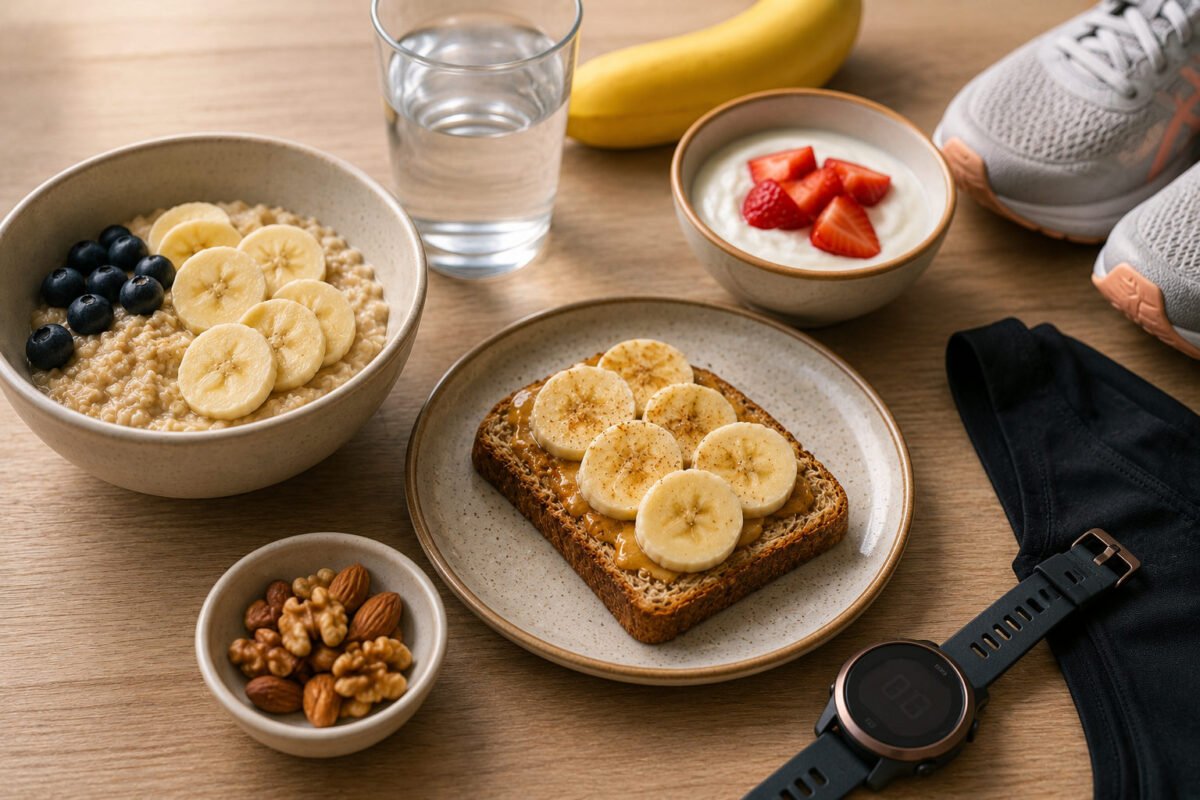
- Bananas
- Toast with jam or honey
- Oats
- Plain yogurt with fruit
- Rice
- Bagels
- Simple breakfast cereals
These foods provide carbohydrates without placing unnecessary demands on digestion.
The exact choice matters less than how comfortably your body tolerates it.
Foods Worth Being Careful With
Some foods naturally digest more slowly.
Large amounts of fat.
Very high fibre meals.
Rich, spicy foods.
Heavy fried meals.
These foods aren’t unhealthy.
They simply may not feel comfortable immediately before running, especially before harder efforts.
Most runners learn through experience which foods are best saved for after the workout.
Practise Before Race Day
One of the oldest pieces of running advice remains one of the best.
Never try anything new before an important race.
The breakfast that works beautifully during training is usually the breakfast that belongs on race morning.
Long runs provide an opportunity to test meals, timing, hydration, and even race nutrition products under realistic conditions.
By race day, there should be very few surprises.
Let Your Body Be the Guide
No article can tell you the perfect breakfast for every run.
Human bodies are wonderfully individual.
Some runners feel excellent after a bowl of oats.
Others prefer toast.
Some enjoy a banana before every run.
Others need nothing at all for shorter distances.
The goal isn’t to copy another runner’s routine.
It’s to discover what consistently leaves you feeling comfortable, energised, and ready to enjoy the miles ahead.
Pre-run nutrition doesn’t need to be complicated.
Eat enough to support the work you’re about to do.
Allow time for digestion.
Choose foods your body knows well.
Then head out with confidence, knowing that your preparation began long before the first step of the run.
The meal you eat before running isn’t simply about avoiding hunger.
It’s another quiet part of the training process, helping every stride feel just a little stronger than the last.