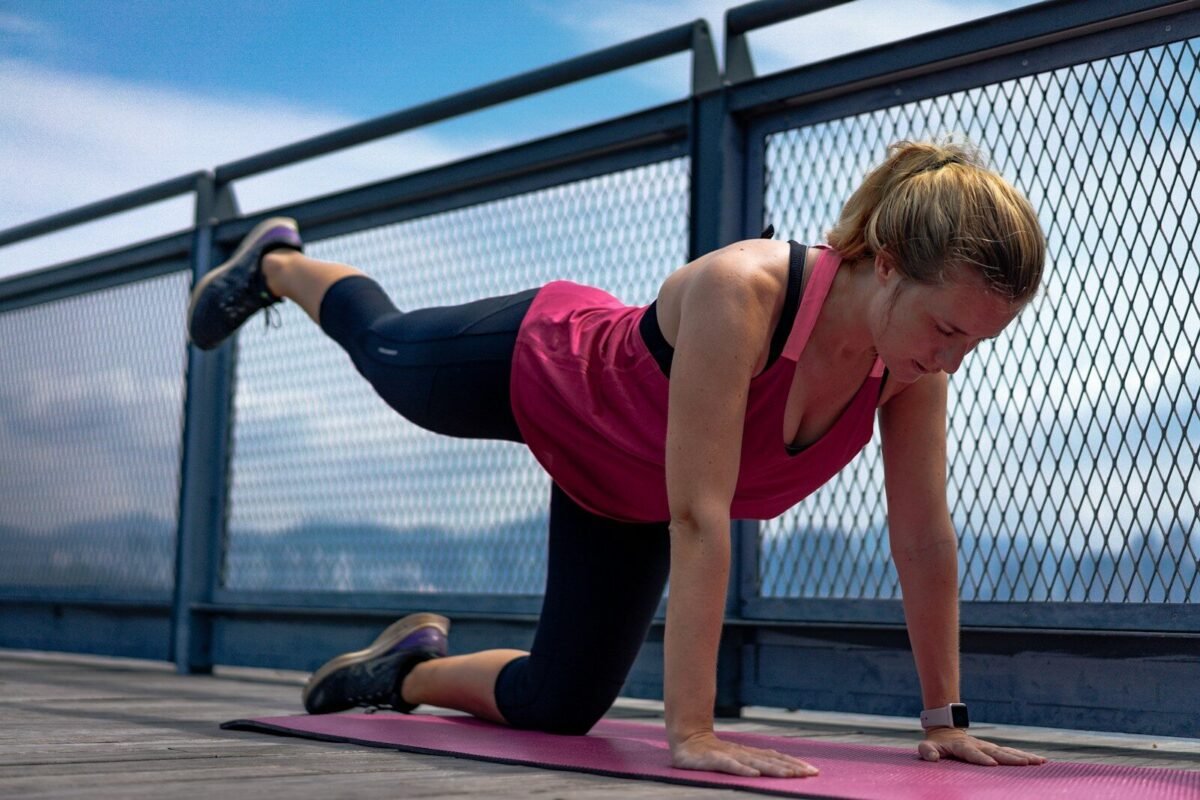
Running is built on repetition. Every stride asks the ankles, knees, hips, and spine to move through a comfortable range of motion while remaining stable enough to absorb impact and produce forward movement. The body performs this remarkable sequence thousands of times during even a moderate run. For that reason, how well you move is every bit as important as how strong you are.
For many years, flexibility was considered the answer to almost every movement problem. Tight muscles were blamed for poor running form, reduced performance, and even injury. As research and coaching have evolved, the conversation has become more balanced. Flexibility still has its place, but runners are increasingly recognising that mobility often plays a much larger role in helping the body move efficiently.
Flexibility Describes How Far a Muscle Can Stretch
Flexibility refers to the ability of a muscle or group of muscles to lengthen.
If you sit on the floor and reach towards your toes, you are testing flexibility. If you stretch your calf against a wall, you are working on flexibility. These movements focus primarily on increasing the available length of muscles and surrounding soft tissues.
Being flexible can make certain movements feel more comfortable, but flexibility alone does not guarantee that you can control those movements while running.
A muscle that stretches easily is not automatically a muscle that functions well during dynamic activity.
Mobility Is About Moving With Control
Mobility takes the idea a step further.
It describes your ability to move a joint through its available range of motion while maintaining strength, balance, and control. Instead of simply asking whether you can reach a position, mobility asks whether you can move into and out of that position confidently and repeatedly.
Think about lowering yourself into a controlled squat or stepping onto a high kerb without losing balance. Those movements require not only flexibility but also strength, coordination, and stability working together.
For runners, this combination is often far more valuable than flexibility on its own.
Running Demands Controlled Movement
During a run, your body is never trying to perform the deepest possible stretch.
Instead, it is repeatedly moving through a practical range of motion while remaining stable enough to transfer force efficiently from one stride to the next. The hips rotate, the ankles flex, the arms swing naturally, and the torso remains relatively stable despite the constant movement beneath it.
Mobility supports this process because it combines movement with control. The goal is not to create the largest possible range of motion but the most useful one.
That distinction helps explain why some very flexible people still struggle with efficient movement, while others who are not especially flexible run comfortably for many years.
More Flexibility Is Not Always Better
It is easy to assume that if some flexibility is good, then more must be even better.
The body rarely works that way.
Every joint has a range of motion that suits its structure and the demands placed upon it. Trying to force extra flexibility where it is not needed may reduce stability rather than improve movement. The body performs best when mobility and strength develop together, allowing joints to move freely while remaining well controlled.
For runners, the goal is not to become a gymnast. It is to move comfortably, efficiently, and consistently.
Where Mobility Matters Most
Although every runner is different, several areas of the body commonly benefit from good mobility.
The ankles help absorb impact and support an efficient stride.
The hips allow smooth movement while reducing unnecessary stress on the knees and lower back.
The upper back contributes to comfortable posture and relaxed arm swing during longer runs.
Improving mobility in these regions often produces benefits that extend well beyond running, making everyday movement feel easier as well.
How Can You Improve Mobility?
Unlike flexibility training, which often involves holding stretches for a period of time, mobility work usually includes controlled movement.
Exercises such as deep bodyweight squats, hip circles, walking lunges, leg swings, and controlled spinal rotations encourage joints to move through comfortable ranges while the surrounding muscles remain active.
These movements are particularly useful before running because they prepare the body for the activity ahead rather than simply increasing muscle length.
Mobility sessions do not need to be long. A few well-chosen movements performed consistently often provide more value than occasional lengthy routines.
Flexibility Still Has a Place
None of this means flexibility should be ignored.
Gentle stretching can feel good after a run, may help reduce the sensation of tightness for some runners, and can improve flexibility where it is genuinely limited. The important point is understanding what stretching can and cannot achieve.
Stretching alone is unlikely to transform your running form or prevent injuries. It works best as one part of a broader approach that also includes strength training, mobility, sensible progression, and good recovery habits.
Move Well Before You Move Far
One of the simplest lessons running teaches is that efficiency matters.
The body does not need extraordinary movement to run well. It needs movement that is comfortable, repeatable, and well controlled. Mobility supports those qualities by helping joints move naturally while strength provides the stability to use that movement effectively.
That is why experienced coaches increasingly place mobility alongside strength rather than treating it as an afterthought. Together they prepare the body for the thousands of controlled movements that every run demands.
Running is not a test of how deeply you can stretch or how flexible you appear. It is a celebration of coordinated movement repeated over and over again. Build strength that supports mobility, develop mobility that complements strength, and allow both to grow gradually through consistent practice. The result is a body that not only runs better but also moves with greater confidence in everyday life.