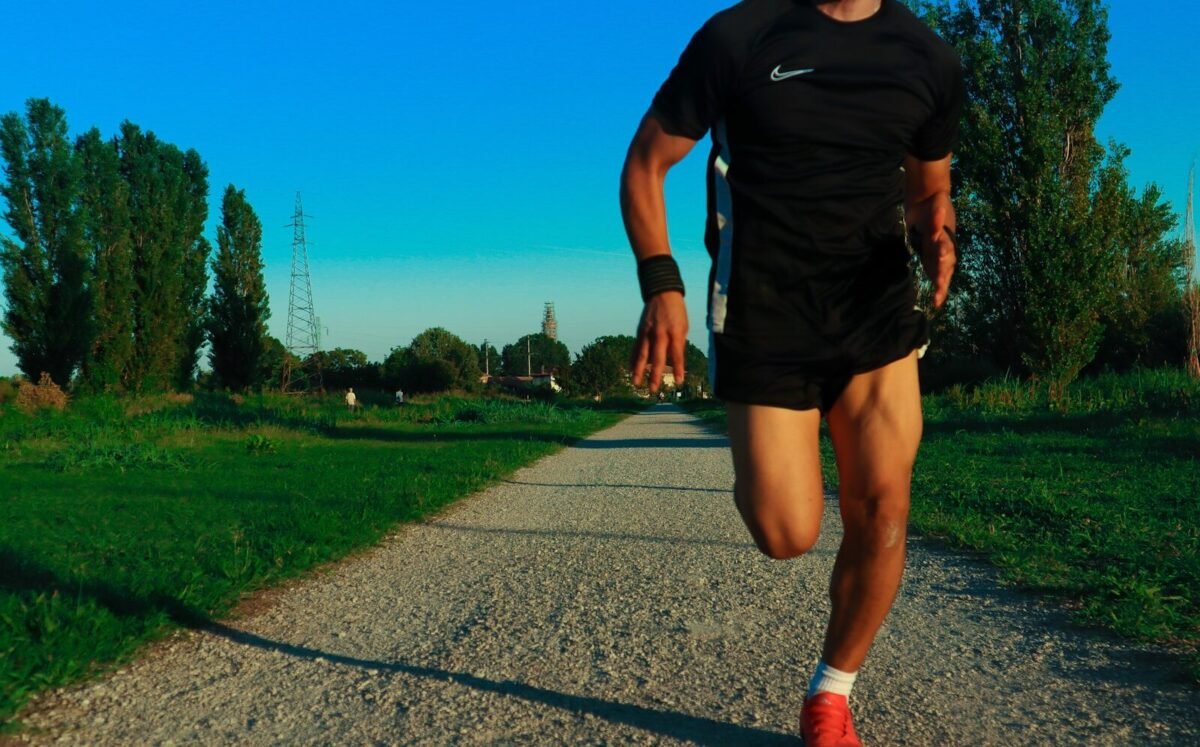
Ask someone which muscles runners use, and the answer usually comes quickly. The legs. It is an understandable response because running certainly feels like a lower-body activity. Your legs carry you forward, climb hills, and absorb the impact of every landing. Yet the more you look at how the body moves, the clearer it becomes that successful running depends on much more than strong legs.
Every stride requires dozens of muscles to work together with remarkable precision. Some generate power, others stabilise joints, while many quietly control movement behind the scenes. If one part of that system becomes weaker or less coordinated, the body often finds another way to compensate. You may still complete the run, but over time those small compensations can reduce efficiency or place unnecessary stress on other areas.
Understanding how these muscles work together helps explain why strength training is so valuable for runners. The goal is not to isolate one muscle but to build a body where every part contributes to the task of running.
The Glutes: The Engine Behind Every Stride
The gluteal muscles are among the most important muscles in running, yet they are often underused in everyday life. Hours spent sitting at desks, driving, or commuting can leave them less active than they should be, even in people who run regularly.
During running, the glutes help extend the hip, stabilise the pelvis, and control movement as the foot contacts the ground. They play an important role when climbing hills, accelerating, and maintaining good posture during longer efforts. Strong glutes also help the knees and lower back by sharing the workload more effectively across the body.
Many runners are surprised to discover that improving hip strength often makes their entire stride feel smoother rather than simply making them feel stronger.
The Quadriceps: Managing Every Landing
The muscles at the front of the thigh, known as the quadriceps, are heavily involved whenever your foot meets the ground. They help control the knee as it bends during landing and contribute to pushing the body forward into the next stride.
Downhill running often places particularly high demands on the quadriceps because they work to control the body’s descent rather than simply producing forward movement. Anyone who has finished a hilly race with sore thighs has experienced this firsthand.
Strong quadriceps help runners tolerate these repeated demands while supporting confident movement over a wide variety of terrain.
The Hamstrings: More Than Just Sprinting Muscles
The hamstrings are often associated with sprinting, but distance runners rely on them just as much.
They assist with extending the hip, bending the knee, and controlling the leg as it swings behind the body. They also work closely with the glutes to produce smooth, efficient movement. Rather than acting alone, the hamstrings are part of a coordinated system that helps transfer force from one stride to the next.
Balanced strength between the hamstrings and surrounding muscles contributes to efficient movement and supports the repetitive nature of endurance running.
The Calves: Quietly Working Thousands of Times
Few muscles work as continuously during running as the calves.
Every step asks them to absorb force, stabilise the ankle, and help propel the body forward. They also work closely with the Achilles tendon, which stores and releases elastic energy with remarkable efficiency.
Because the calves are active during every stride, they often become one of the first areas to complain when training volume increases too quickly. Gradually building calf strength helps prepare them for the repetitive demands of longer distances.
The Core: The Body’s Stable Centre
The word core is often misunderstood.
It is not simply about developing visible abdominal muscles. The core includes the muscles surrounding the trunk and pelvis that help keep the upper body stable while the arms and legs move independently.
During running, a stable core reduces unnecessary movement, allowing energy to be directed into forward motion instead of being lost through excessive twisting or side-to-side movement. Good core strength contributes to efficient posture, particularly during longer runs when fatigue begins to challenge technique.
Think of the core as the body’s central support system rather than a collection of abdominal exercises.
The Hip Stabilisers: Small Muscles With a Big Job
Around the outside of the hips are several smaller muscles whose primary role is stability rather than power.
These muscles help keep the pelvis level each time you stand on one leg, something that happens with every running stride. When they become fatigued or weak, the body may compensate by altering movement elsewhere, particularly around the knees or lower back.
Although they rarely receive much attention, these muscles quietly influence how comfortably and efficiently you run.
Don’t Forget the Feet
Your feet contain dozens of small muscles that help maintain balance, support the arch, and adapt to changing surfaces.
These muscles work constantly, particularly during trail running or uneven terrain where every foot placement is slightly different. While they are much smaller than the muscles higher up the leg, they contribute to stability throughout the entire running chain.
Strong feet begin with simply allowing them to do the job they were designed to perform. Walking barefoot safely at home, performing simple balance exercises, and gradually exposing the feet to varied movement can all contribute to healthy foot function.
Running Is a Team Sport Inside the Body
It is tempting to search for one muscle that explains good running.
The glutes.
The calves.
The core.
In reality, the body rarely works that way.
Every stride depends on cooperation. Large muscles generate power, smaller muscles provide stability, tendons store elastic energy, and the nervous system coordinates everything with remarkable precision. Remove one part of that partnership and the rest of the system has to work harder to compensate.
That is why effective strength training focuses on movement rather than isolated muscles.
Train the Whole Runner
Running is one of the most repetitive movements humans perform. During a long run, each muscle group repeats its role thousands of times, often without attracting much attention. The body does not ask whether one muscle is more important than another. It simply asks whether every part is prepared to contribute.
The most resilient runners understand that strength is built across the entire body. They develop hips that stabilise each stride, calves that tolerate repeated loading, cores that maintain posture, and feet that provide a confident connection with the ground. None of those improvements happen overnight, but together they create a runner who moves with greater confidence and efficiency.
Strong running is not about having one exceptional muscle group. It is about building a body where every part quietly supports the next stride. When those pieces work together, running begins to feel smoother, more economical, and far more enjoyable over the long term.