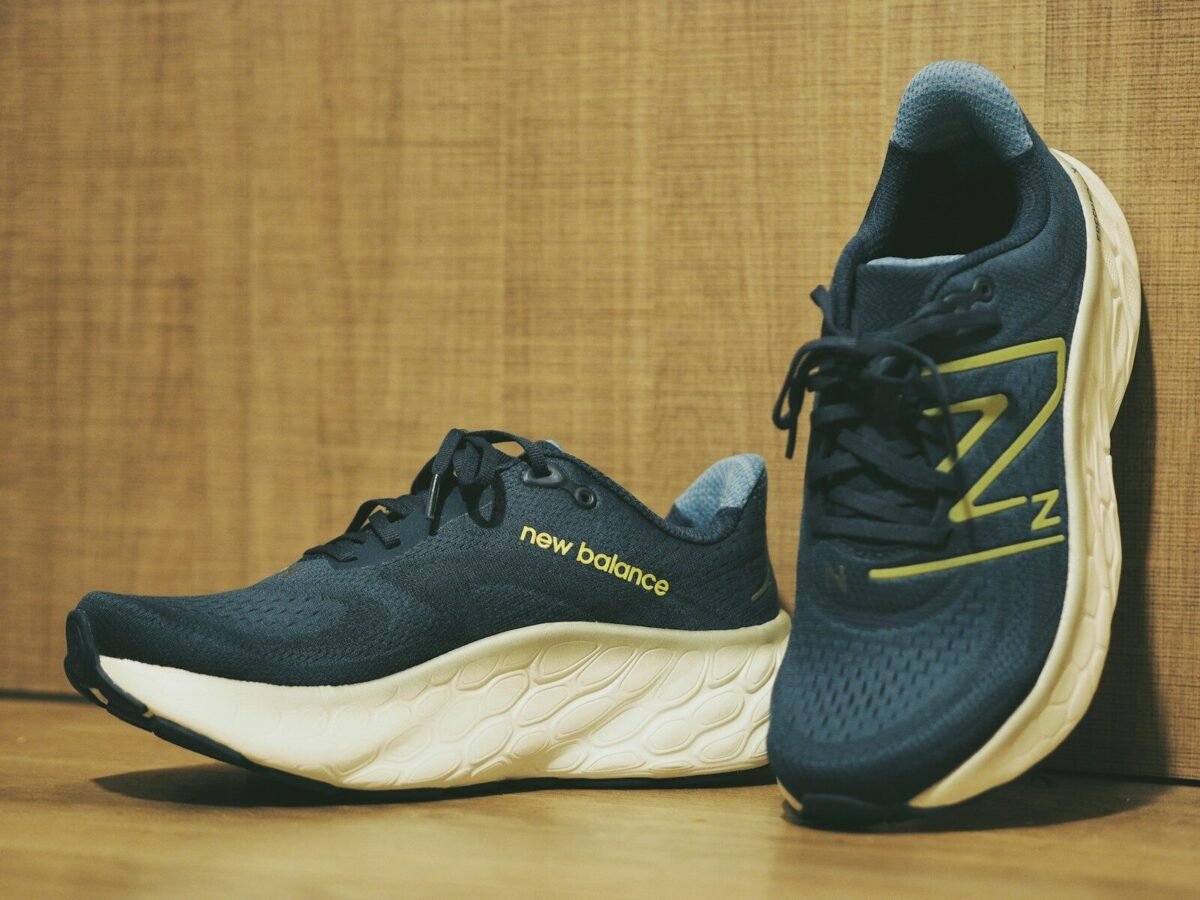
Few aspects of running shoes have changed as dramatically over the past decade as cushioning. Modern foams have become lighter, softer, and more resilient than ever before, allowing manufacturers to create shoes that look and feel very different from those available only a few years ago. Some runners enjoy the sensation of abundant cushioning beneath their feet, while others prefer a firmer, more connected feeling with the ground.
It is easy to assume that cushioning alone determines whether a shoe is good or bad. In practice, cushioning is simply one part of the overall running experience. The right amount depends on your comfort, your preferences, and the type of running you do rather than on a universal rule that applies to everyone.
What Does Cushioning Actually Do?
Every time your foot lands, the shoe’s midsole compresses before returning towards its original shape as you move into the next stride.
This process contributes to the overall feel of the shoe. A highly cushioned midsole often creates a softer landing sensation, while a firmer shoe provides a more direct connection with the ground. Modern midsole foams are also designed to return energy efficiently, helping the shoe feel lively without becoming unstable.
Cushioning influences comfort and ride quality.
It does not remove all impact forces or eliminate the natural demands of running.
Understanding that distinction helps set realistic expectations.
Minimal Cushioning
Minimal running shoes place the foot closer to the ground and typically contain less midsole material than traditional running shoes.
Many runners appreciate the increased ground feel and the more direct connection with each step. The lighter design may also appeal to people who enjoy a simpler, less structured running experience.
Minimal shoes are not automatically better for running form or injury prevention. They also ask the feet and lower legs to adapt to different loading patterns, particularly if someone has previously run only in more cushioned footwear.
For runners interested in trying minimal shoes, gradual adaptation is usually much more important than making a sudden change.
Moderate Cushioning
Moderately cushioned shoes occupy the middle ground.
They provide enough cushioning to feel comfortable during everyday training while still maintaining a balanced and versatile ride. This is why many daily training shoes fall into this category.
For new runners, moderate cushioning often provides an excellent starting point because it adapts well to a wide variety of distances, training sessions, and running surfaces.
Rather than excelling in one specific situation, these shoes are designed to perform consistently across many different types of runs.
Maximum Cushioning
Highly cushioned shoes contain larger volumes of midsole foam and often create an exceptionally soft underfoot experience.
Some runners enjoy this feeling during long runs when comfort becomes an important priority. Others appreciate the smoother ride during recovery runs or after demanding training sessions.
At the same time, maximum cushioning is not automatically the most comfortable choice for everyone. Some runners prefer firmer shoes because they feel more stable or provide better awareness of the ground beneath them.
Comfort remains highly individual.
The amount of cushioning that feels ideal for one runner may feel completely different for another.
More Cushioning Does Not Always Mean More Protection
One of the most common assumptions in running is that a softer shoe always reduces injury risk.
Current evidence does not support such a simple conclusion.
Running injuries are influenced by many interacting factors, including training load, recovery, previous injuries, strength, sleep, nutrition, and individual biomechanics. Cushioning may influence comfort, but it is only one part of a much larger picture.
Rather than searching for the most protective shoe, it is usually more helpful to choose one that feels comfortable and encourages natural movement.
Consider Where You Run
The type of running you do can influence your preference for cushioning.
Someone who spends most of their time on roads may enjoy a different feel from someone who regularly runs on forest trails. Long-distance runners may value comfort during extended sessions, while others prefer a more responsive sensation for shorter workouts.
There is no universally correct choice.
The best cushioning is often the one that matches both your environment and your personal preferences.
Let Experience Guide You
The first pair of running shoes you buy is unlikely to teach you everything about your preferences.
With time, however, you begin noticing what feels comfortable.
Perhaps you enjoy a softer ride during recovery runs.
Maybe you prefer a slightly firmer shoe for faster sessions.
Some runners eventually rotate different shoes for different purposes, while many remain perfectly happy using one versatile pair for every run.
Your own experience becomes one of the most valuable guides when choosing future shoes.
Comfort Is Still the Best Guide
Running shoe technology will continue evolving.
New foams will become lighter.
Designs will change.
Marketing messages will promise even greater performance.
Through all these developments, one principle remains remarkably consistent.
Choose the shoe that feels comfortable on your feet and suits the running you actually do.
Cushioning is an important part of that decision, but it should never become the only one. A shoe is far more than the amount of foam beneath your feet. Fit, stability, flexibility, weight, and your own running experience all contribute to the way it feels.
The most enjoyable running shoe is rarely the one with the highest stack of cushioning or the firmest ride. It is the one that allows you to forget about your footwear altogether and simply enjoy the run ahead. When comfort, confidence, and consistency come together, the question of cushioning becomes much easier to answer.
Leave a Reply